PAVEMENT PRINT STUDIO /
Internship + In-House Designer
Mobile Printmaking Project
MAY-JULY 2024 + MARCH-MAY 2025
SKIP TO:
BRANDING /
Designer,
Screen Printer,
Facilitator.
ABOUT PPS:
Pavement Print Studio is a student-led mobile printmaking project from RMIT Graphic Design Brunswick. Established in 2025, working with multiple screen printing techniques, creating accessible collaborative experiences in public spaces.
INTRODUCTION:
The idea was there, the grant was in, and the festival was on it’s way. Unfortunately it was coming up in.. 2 weeks.
DELEGATION & DIRECTION:
Starting from absolute scratch, Simon gathered the rest of the team, and we began working together to practise and plan for our first event. This team was made up of other internees, as well as Student volunteers + supporting teachers and specialists.
As an early participant, I was tasked with the branding and web design whilst Simon began briefing the newer members of the crew.
DESIGN BRIEF:
Simon had asked that the logo represent some sort of movement, emphasising the mobile aspect of the brand, as well as conveying some Print related themes.
Although Simon had recommended I use some existing lettering of mine that captured the themes of navigation and movement, upon my first trials it was deemed unsuccessful. I decided to jump into a new ideation opposed to recycling past ideas.
CONCEPT:
The first step was researching print iconography.
This involved preflight icons, physical print symbols such as crop and / or registration marks, and other industrial shapes and symbols.

VISUAL IDENTITY - As an early assistant of Simon Rankin’s Pavement Print Studio founding, the first role I undertook was completing our Visual Identity & Brand Application.
DEVELOPMENT:
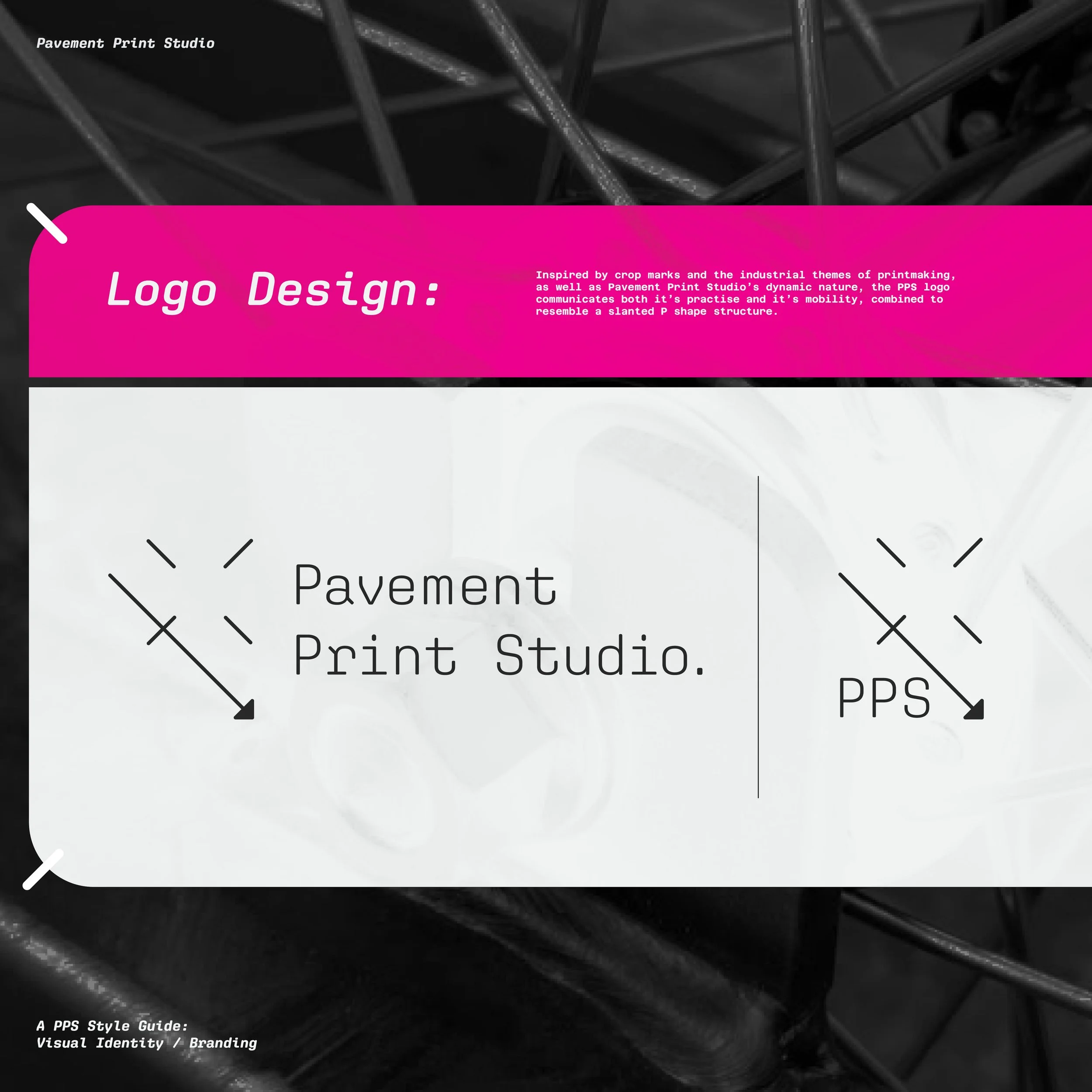
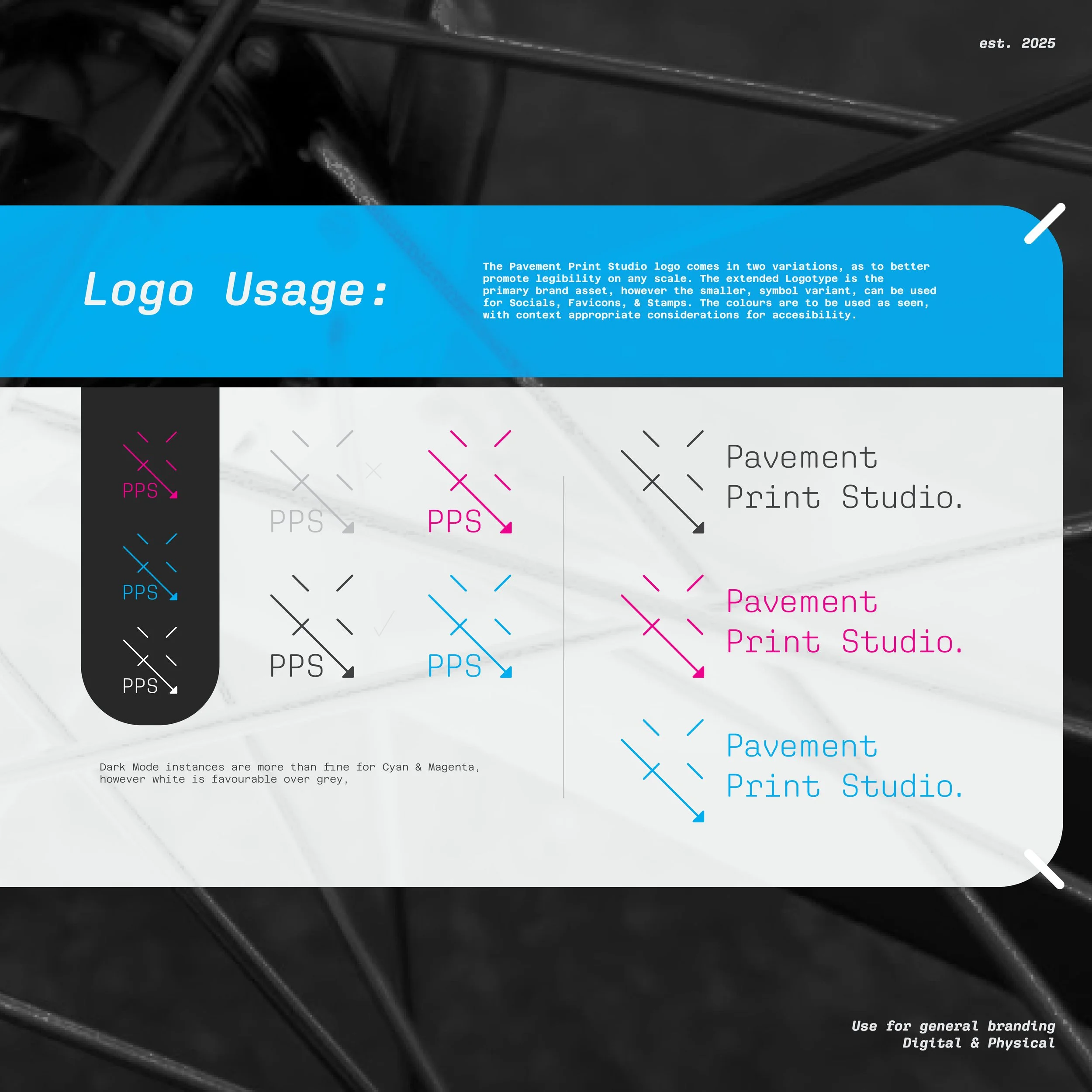
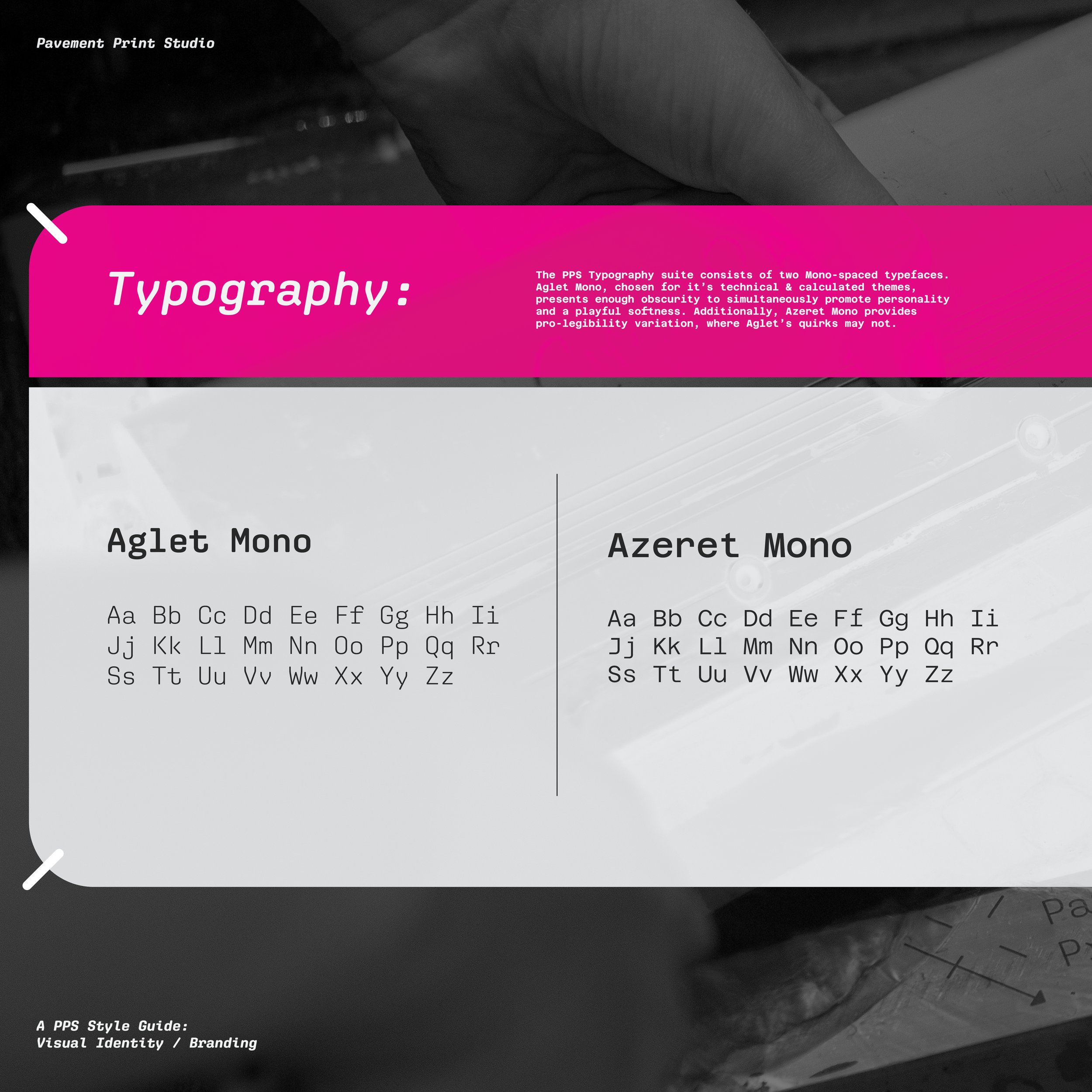
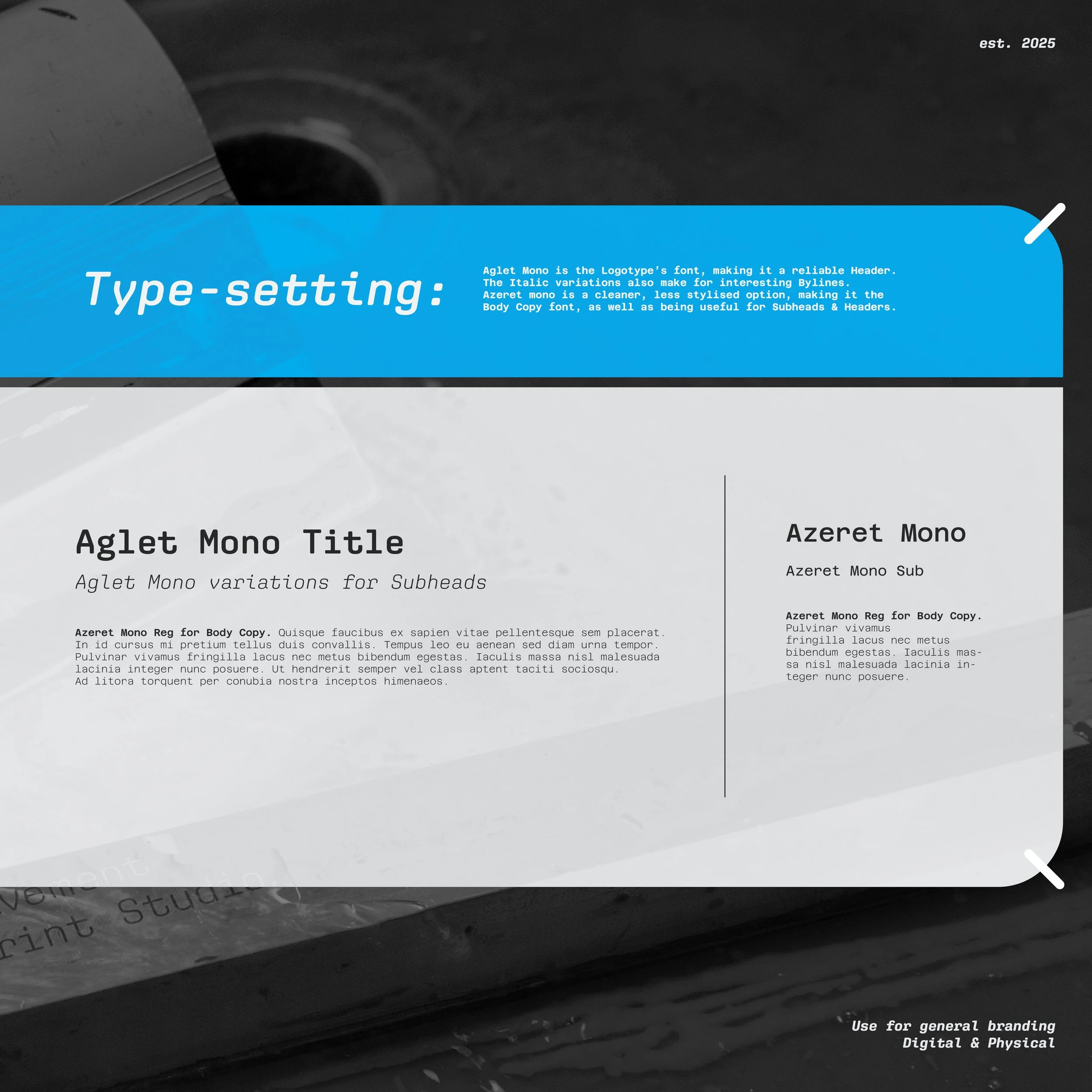
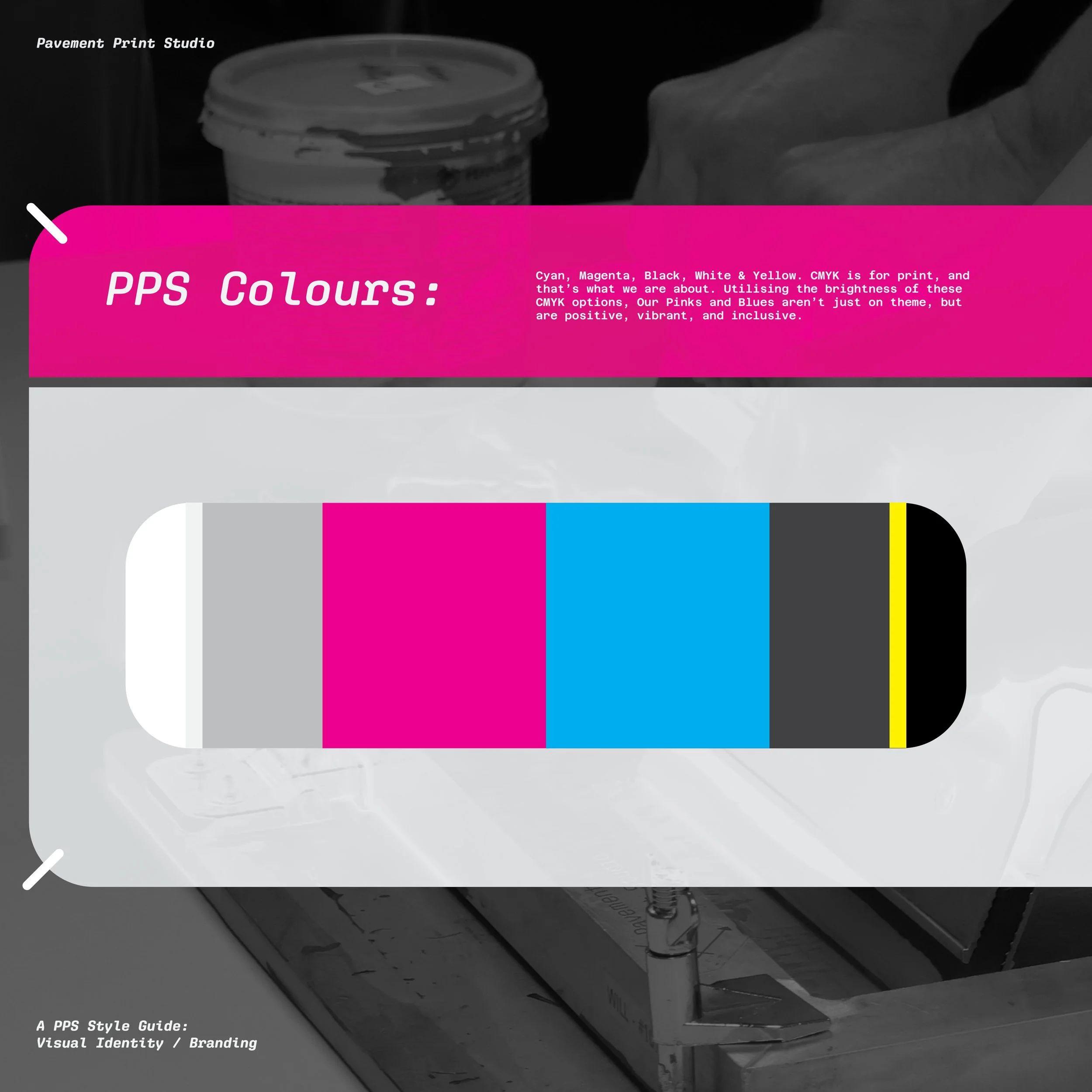
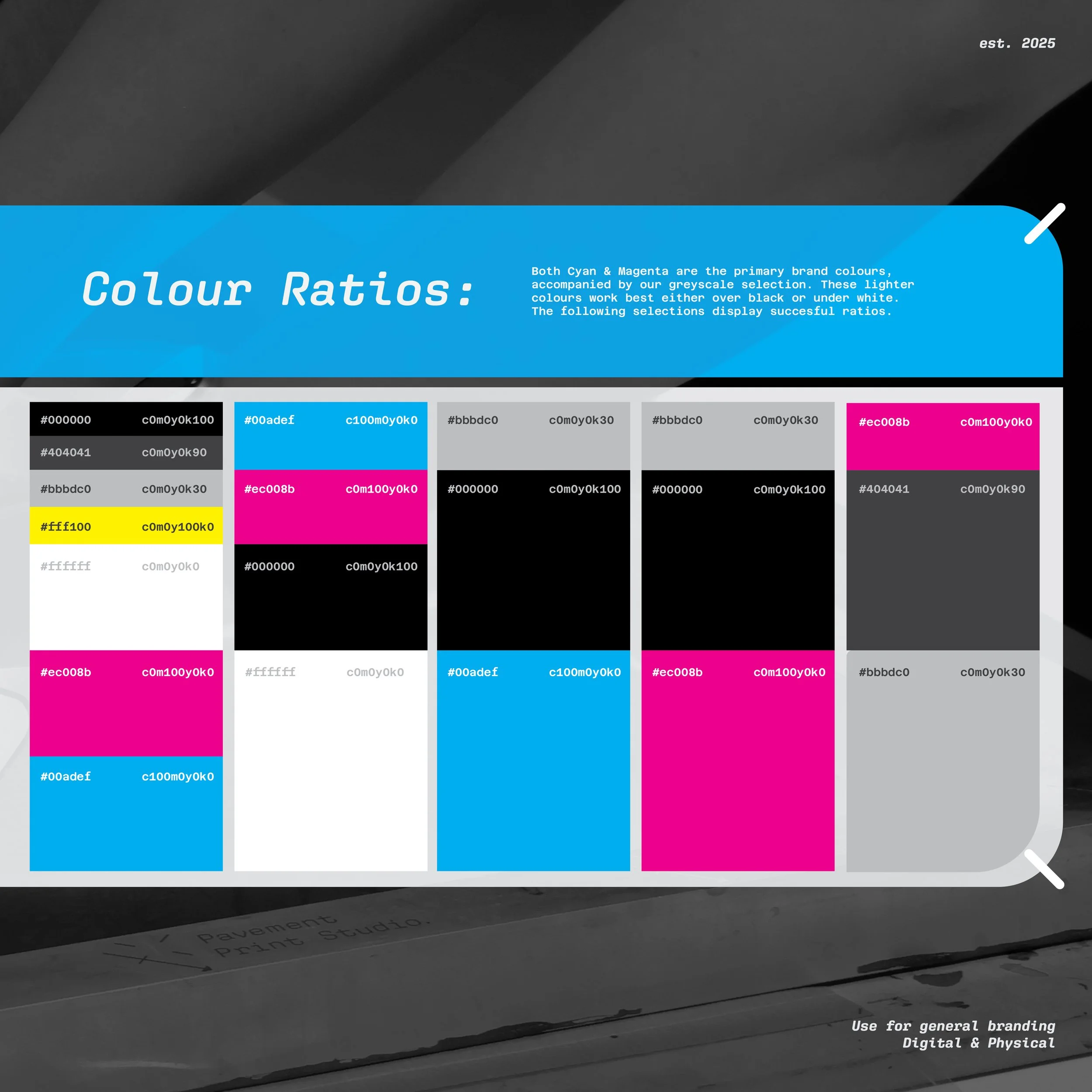
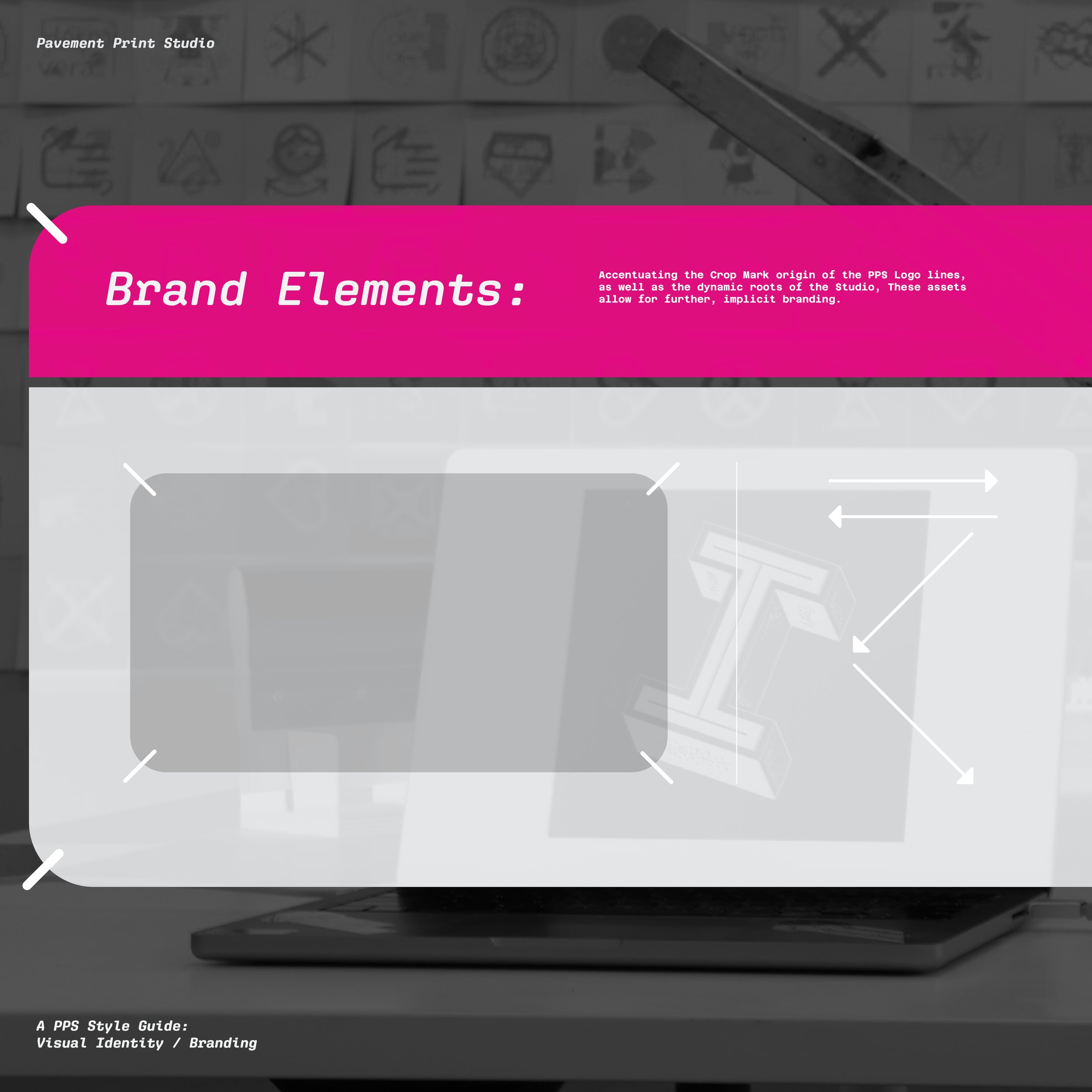
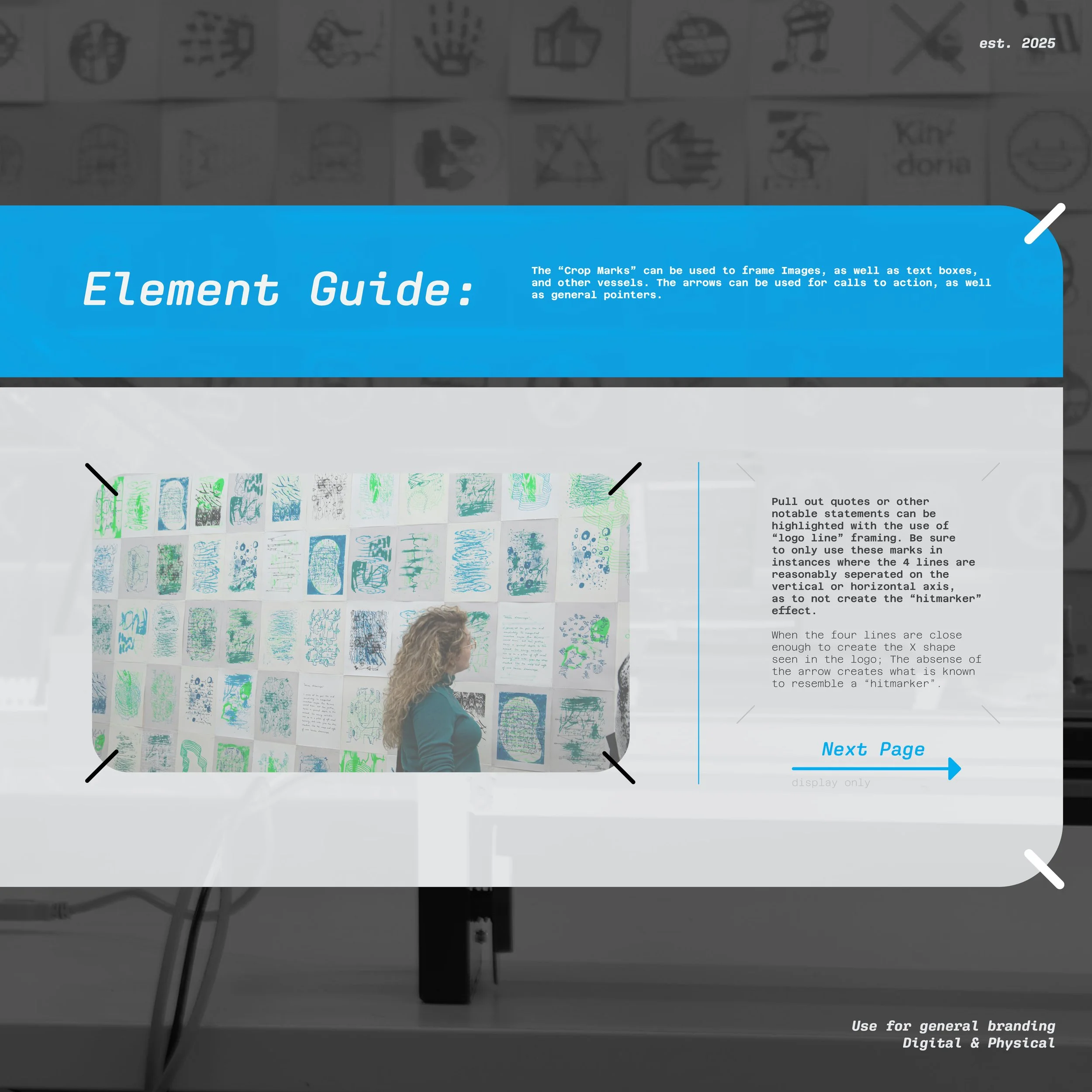
Using these markings as inspiration I put together some different formations of crop marks, met with the most logical symbol for movement that I could think of - an arrow. But this was more than just symbolism. As Simon had first recommended lettering, I wanted to maintain this theme of subtle initials, and created a ‘P’ formation using the print marks as the closed counter and the arrow as the stem. I then slanted the icon on a 45 degree angle to avoid a downward arrow (felt negative) as well as to create a deeper sense of forward movement. I paired this icon with some industrial looking mono-type, to continue leaning into the technical vibe, as well as a CMYK inspired colour palette, solidifying it’s reference in print.
FEEDBACK & REFINEMENT:
I then utilised our first group meeting / print session as a chance to gather some feedback. It was decided the Logo needed a thinner stroke, and there was some kerning needed on the word-mark. Apart from that the look was agreed upon.
I made these adjustments and the suite was confirmed.
Finally, I turned the entire suite into a coherent Style Guide, making for a timeless piece of PPS equipment that can be passed down, tweaked, refined and built on by the future community of designers and collaborators that work within our collective.
Scroll For Part 02 MAY - JULY 2024
INSTALL 01 /
Designer,
Screen Printer,
Facilitator.
CITY NORTH FESTIVAL:
Presented by RMIT University with the City of Melbourne, Regen Melbourne, Melbourne International Games Week and many partners - The Fest is a showcase and civic invitation to see how collaboration, creativity and care are shaping inclusive and regenerative futures.
TRAINING:
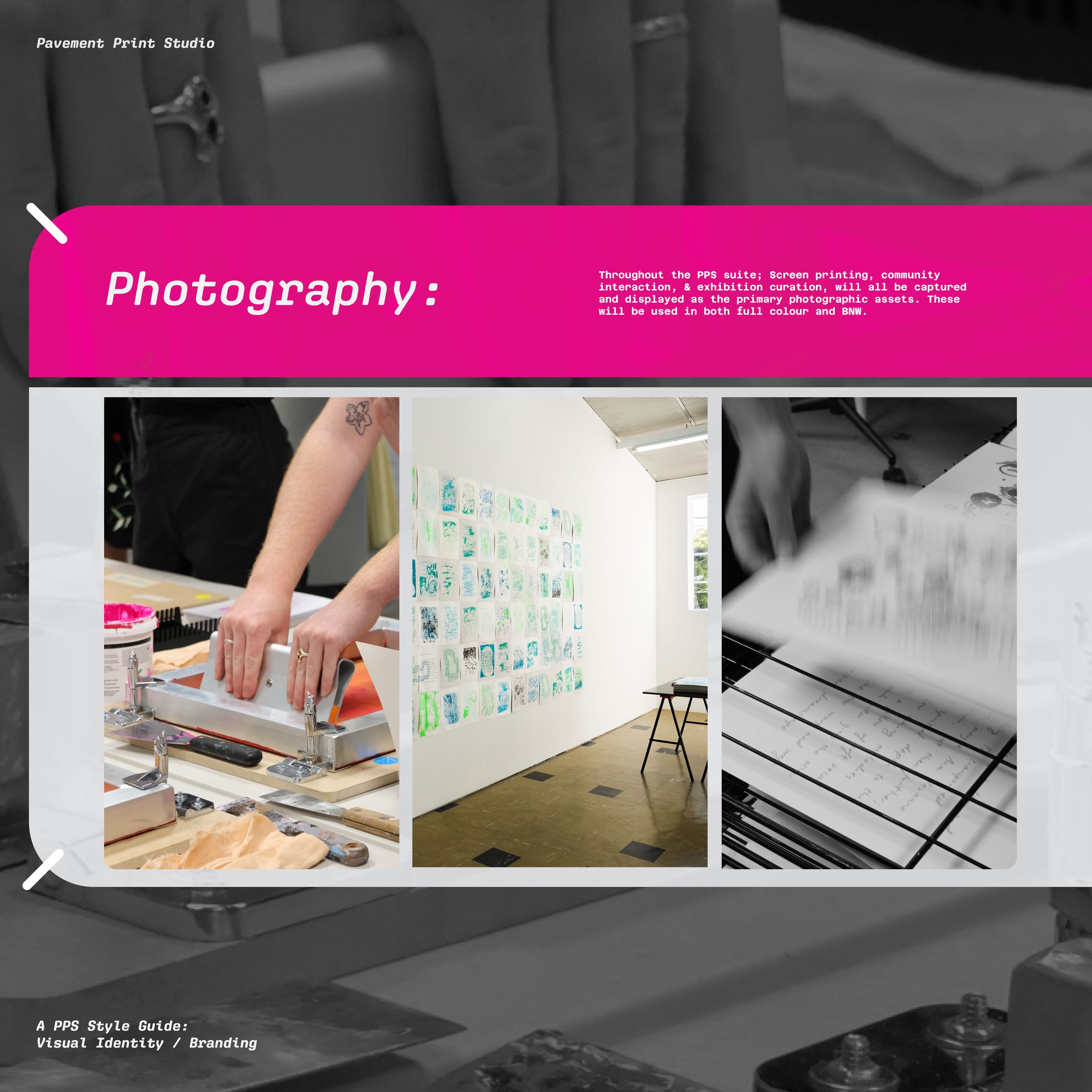
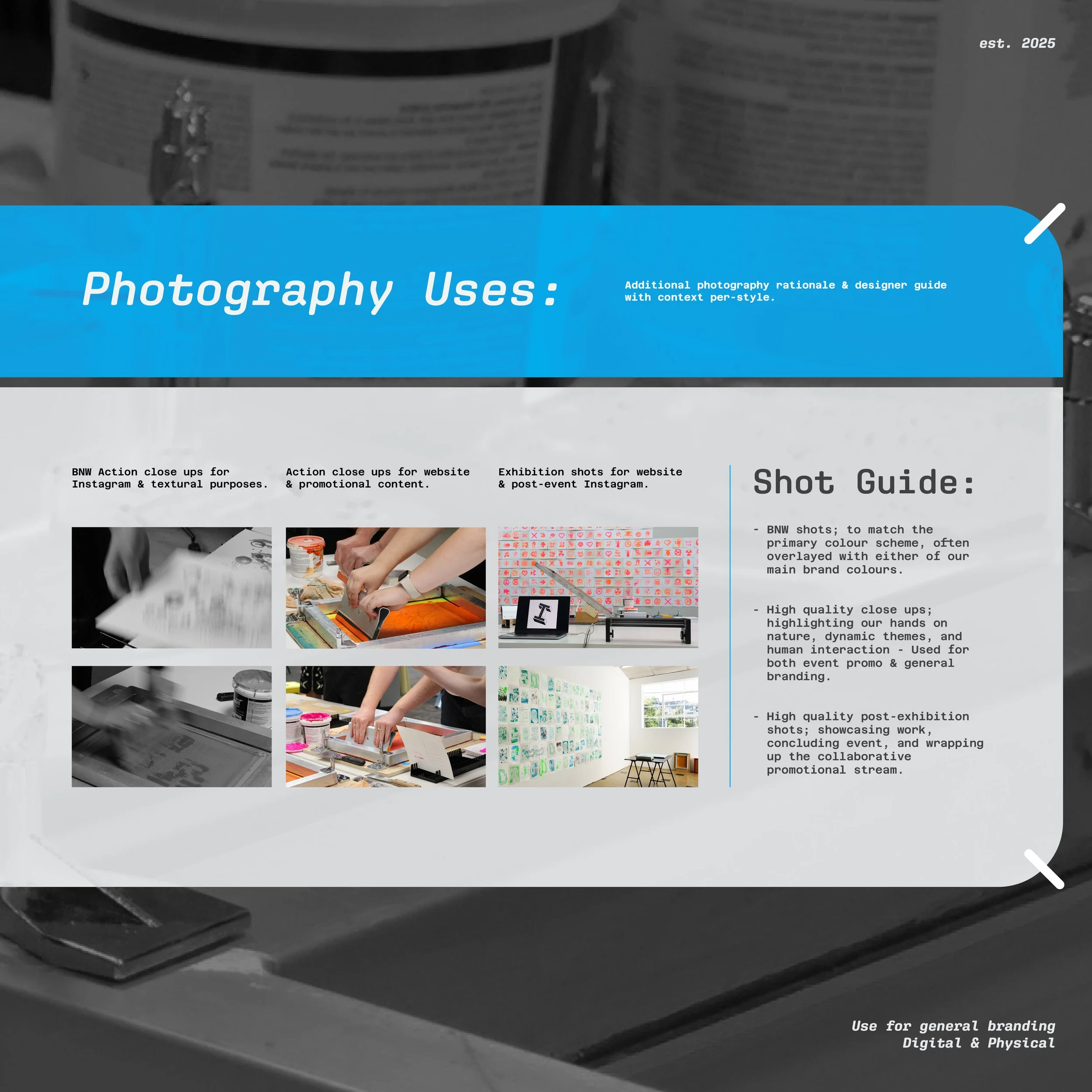
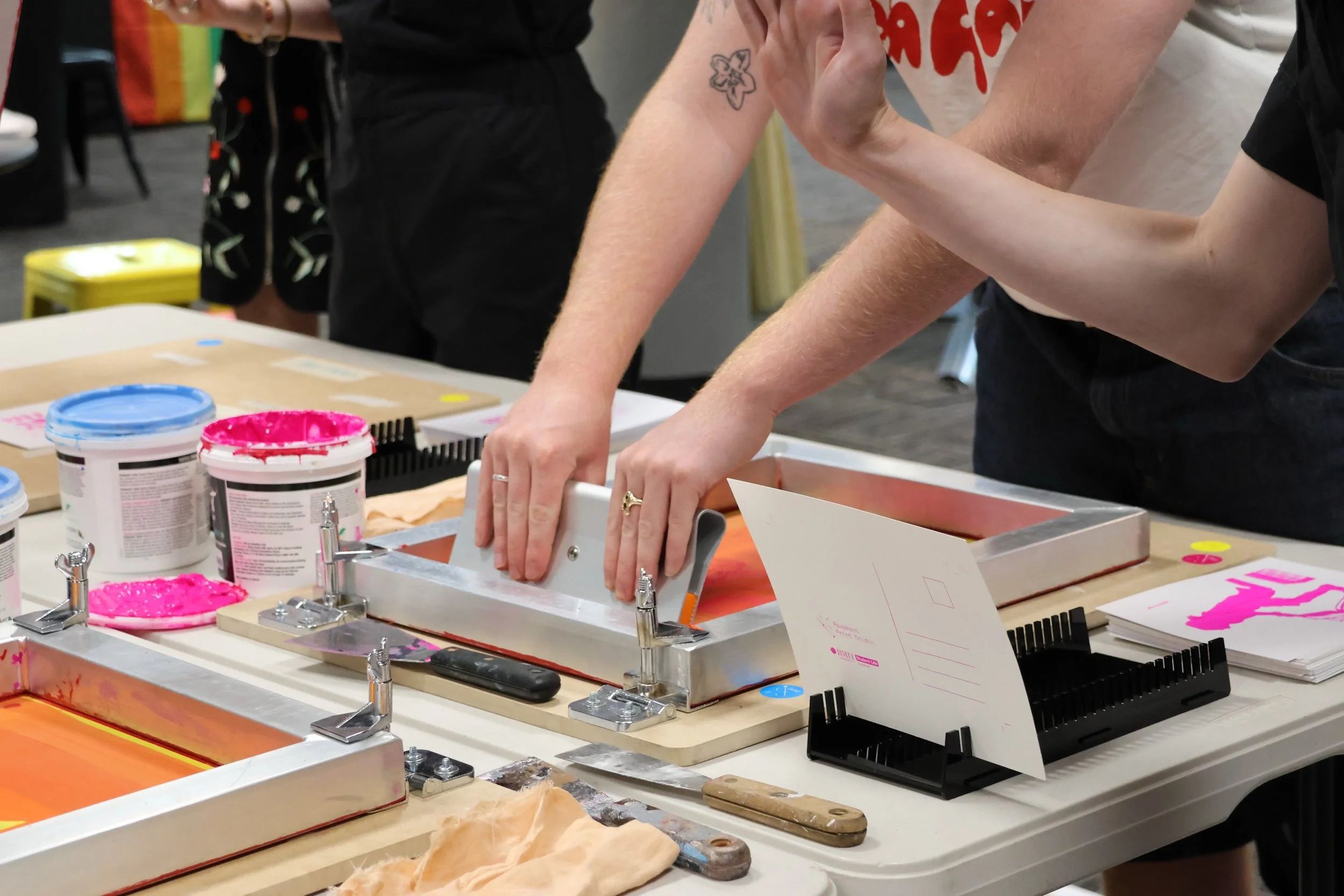
Considering I had done no prior Screen-Printing, Learning how to use the HANDERUDE Plate Making machine, and the SURIMACCA Modular Screen system, was quite the feat. Not to mention learning the general technique of making effective passes with a squeegee and ink on paper.
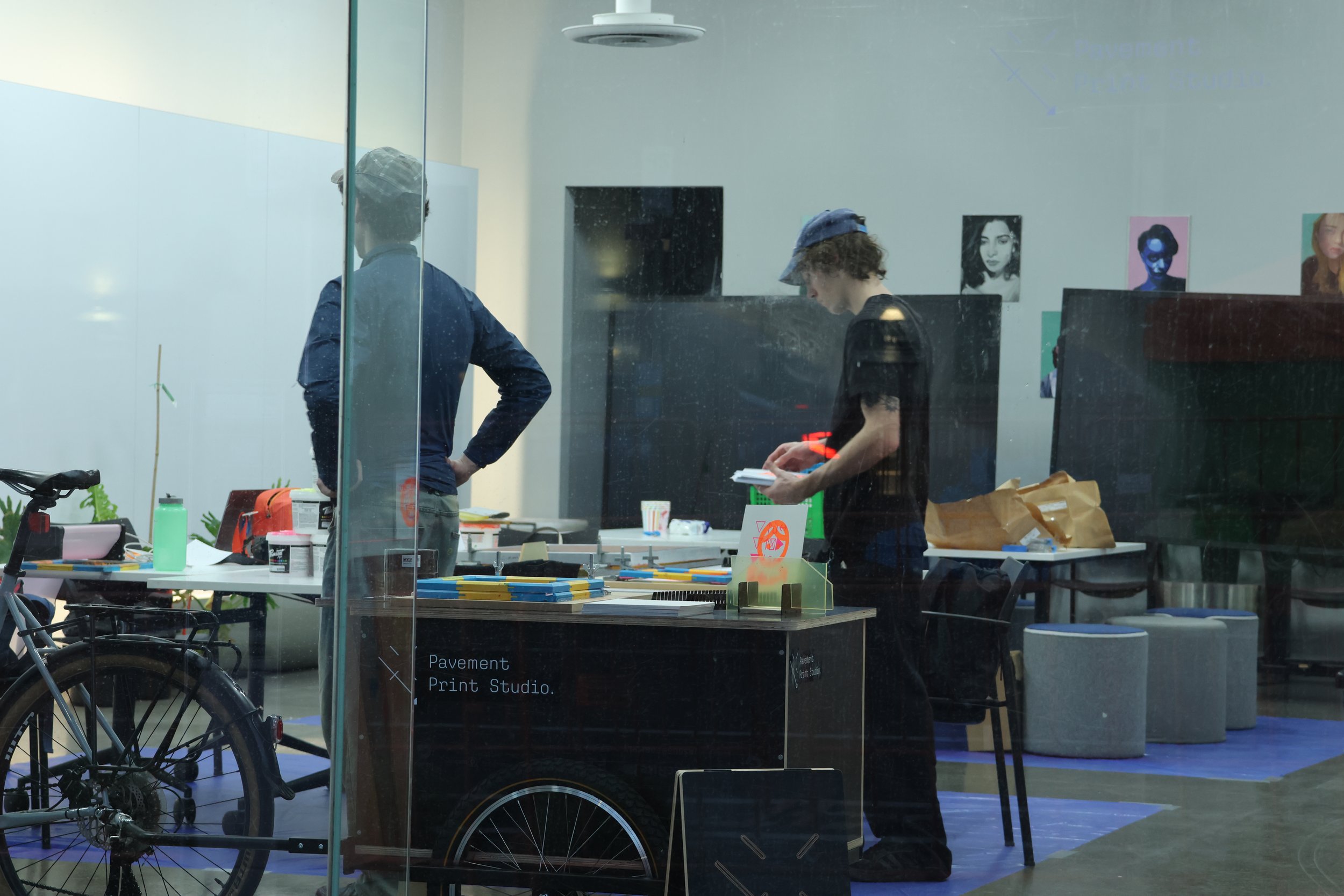
As a team, we mastered an efficient work-flow with this system of printing, enough so to be able to successfully demonstrate & instruct participants in their own printing.
FESTIVAL PREP:
We then began to prepare our Festival products and collateral. This included the application of my Style Guide on a range of deliverables; which for me, included an A-Frame, Stickers, some Signage, and our Exhibition Decal which explained our project and who was involved.
With everything prepared, the team and I helped Bump In; organising our stations, and conducting some test runs before the big day.
SCREEN PRINT INSTRUCTING - As a representative of Pavement Print Studio, I became well practised in our screen printing methodology, enough so, to become a workshop facilitator and instructor.
WORKSHOPS:
2 Days of workshops. The 2 day duration of the Festival went astonishingly well, with far more people coming through than ever anticipated. We began having to take on multiple roles at once, floating around speaking to viewers about who we are and what the exhibition is about, whilst teaching and supervising participant’s printing. We also had to station team members on the printing of SURIMACCA screens, as well as the assembling of HANDERUDE screen frames.
“Everyone from children and community members through to RMIT leadership, City Council representatives, and the RMIT Creative Spaces team stopped by”
Although this was more traction and a far busier space than expected, these sessions ran smoothly and successfully, with zero incidents or dramas, and many many happy customers. Not to mention hundreds of prints.
OUTCOME:
Overall this was a very exciting project that I was honoured to be involved in. I learnt how to screen-print from no experience, to a now confident and informed printmaker, I learnt how to incorporate brand architecture, with the use of our sponsors logos throughout the event’s design roll out, and I learnt how to professionally and efficiently work with a large group of both team members and participants, in a highly time sensitive design environment.
Scroll For Part 03 MAY - JULY 2024
INSTALL 02 /
Socials, Videography,
Screen Printing,
Exhibition Design.
EXHIBITION DESIGN - For this project, I worked to collaboratively respond to KLATSCH’s performance, drawing, printing, & planning. I also designed print collateral and helped with videography for both socials and our exhibition.
TRANSMEDIA RELAY:
The Transmedia Relay, initiated by Aimless Research Institute, positions creative work as a chain of response. Bruno Latour diagrams became sonic improvisation became screen-printed installation. The relay continues from here to whoever responds next. We're a single node in an ongoing network of artistic conversation.
LESS UNREASONABLE:
During KLATSCH’s performance, We responded to our predetermined prompts / guidelines, to create drawn reactions to the live sonic sound performance. We then reviewed each others drawings, discussed our perceived themes and narratives of the performance, and planned how we could extrapolate and communicate these themes into a visual, physical print, installation.
REFINING:
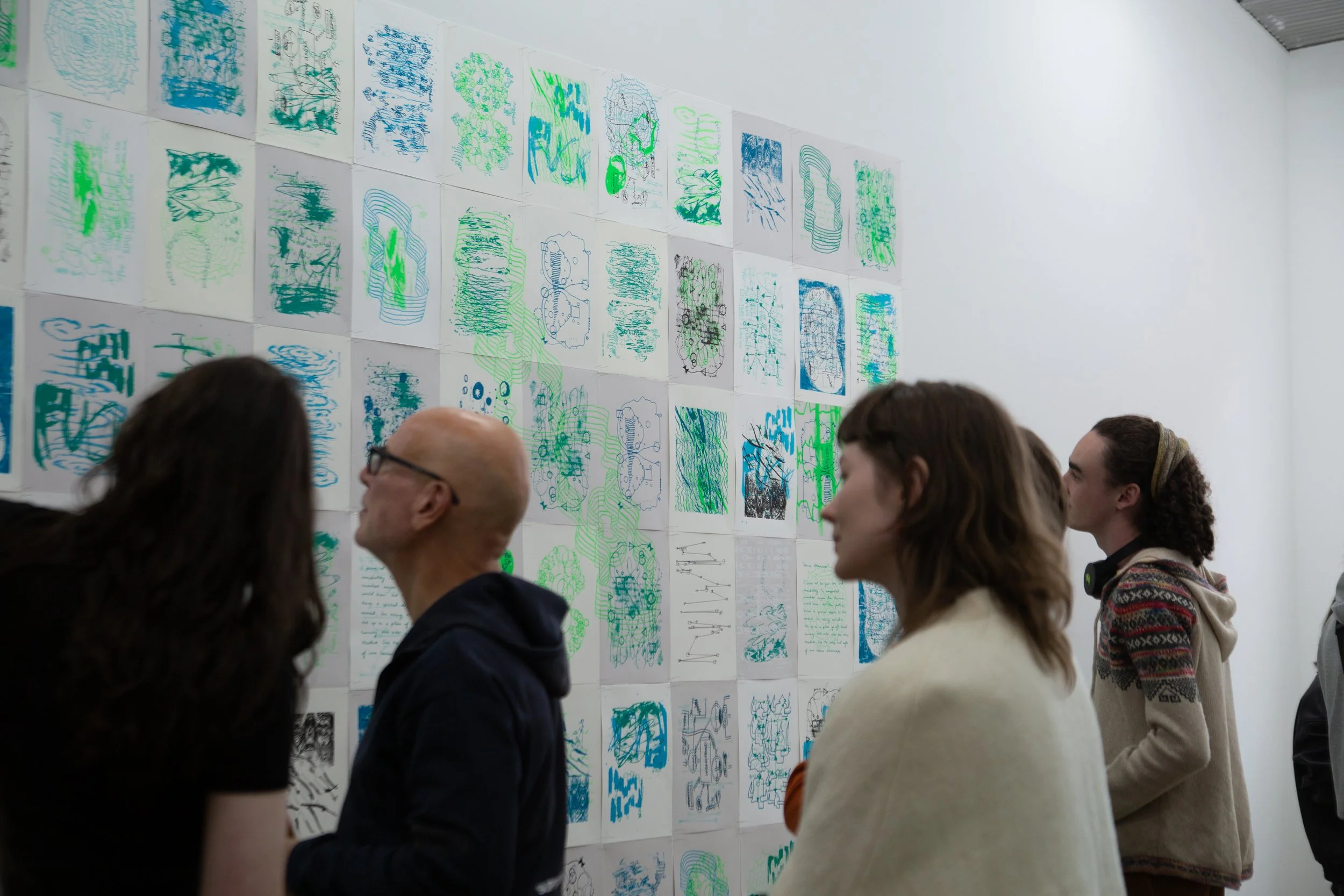
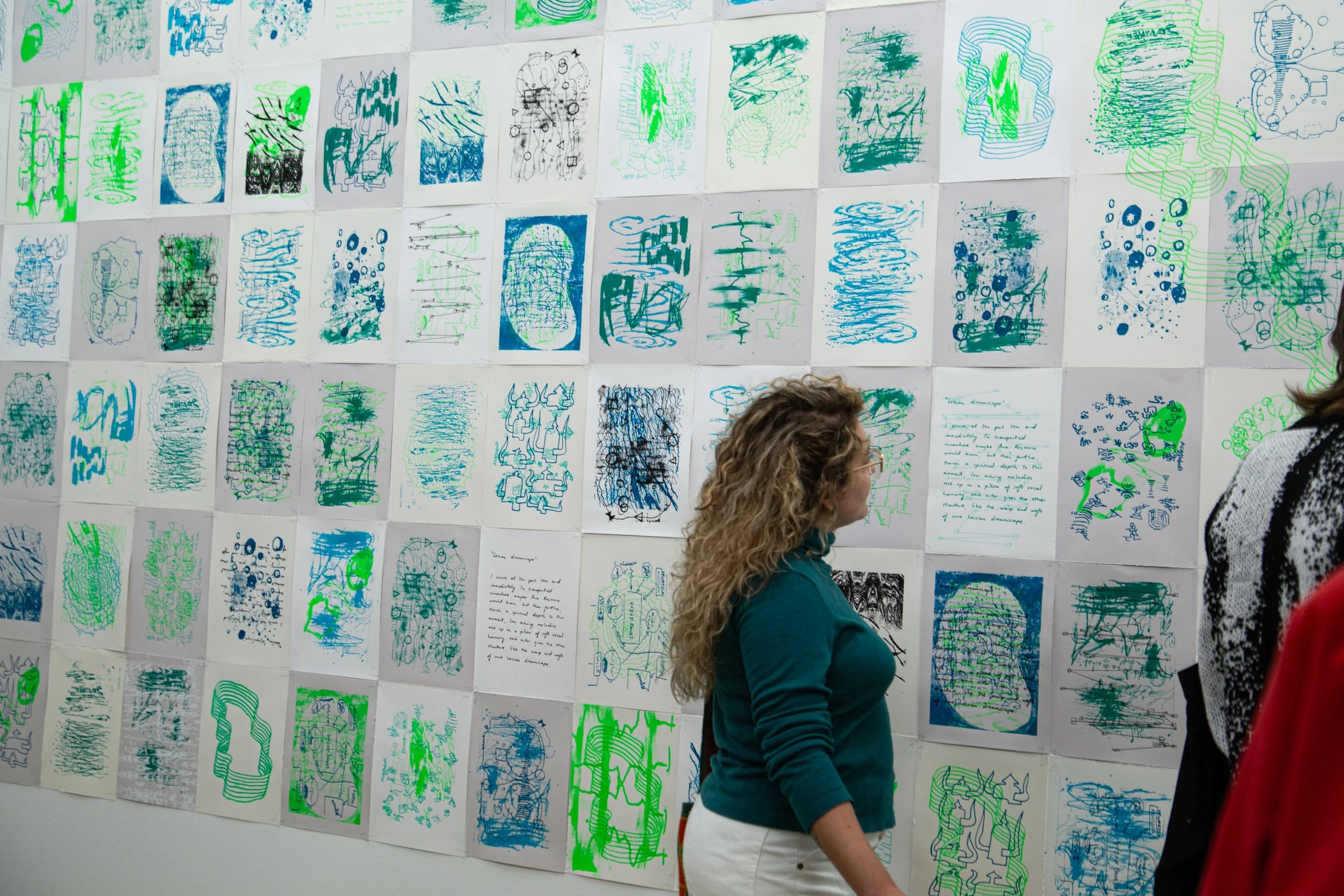
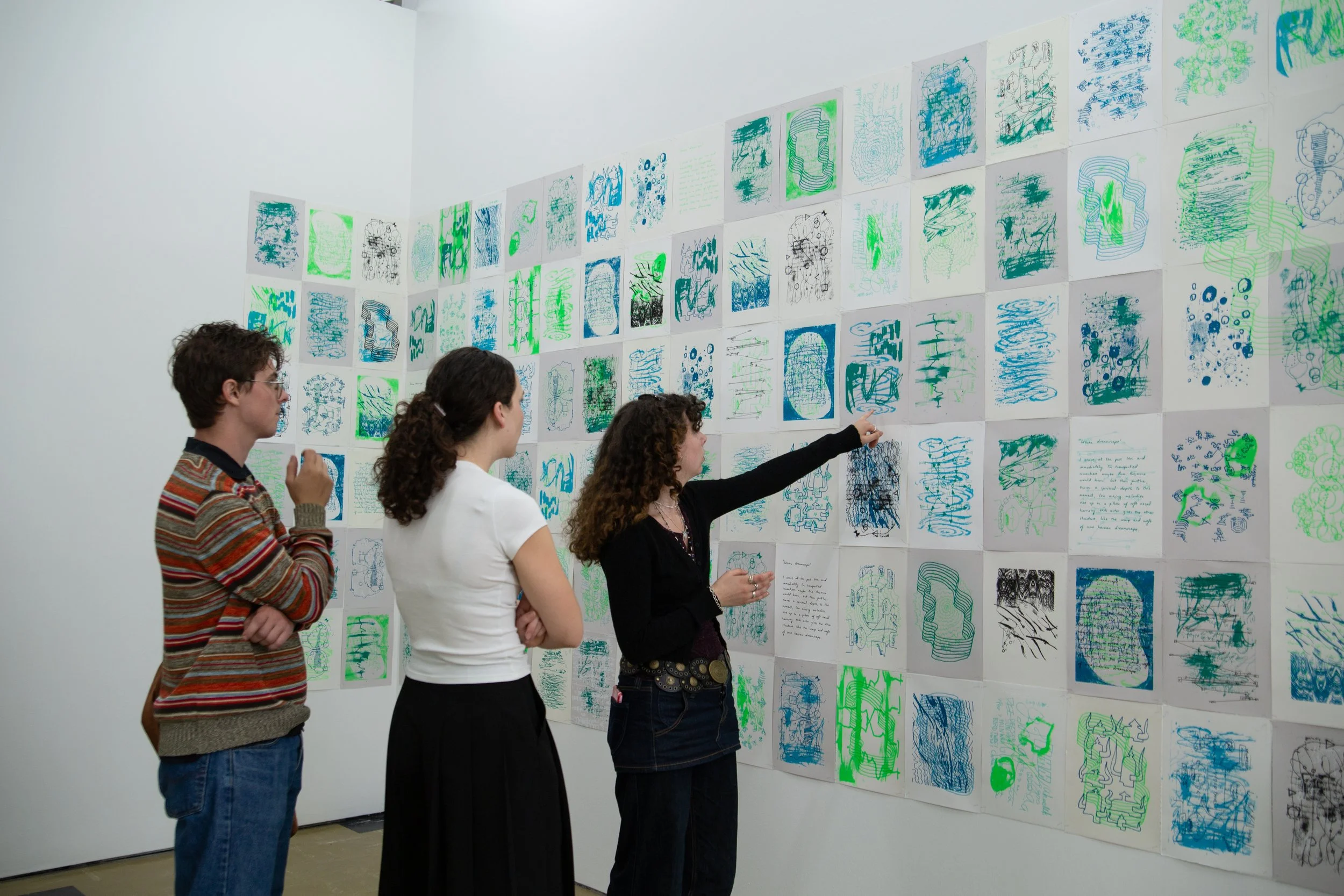
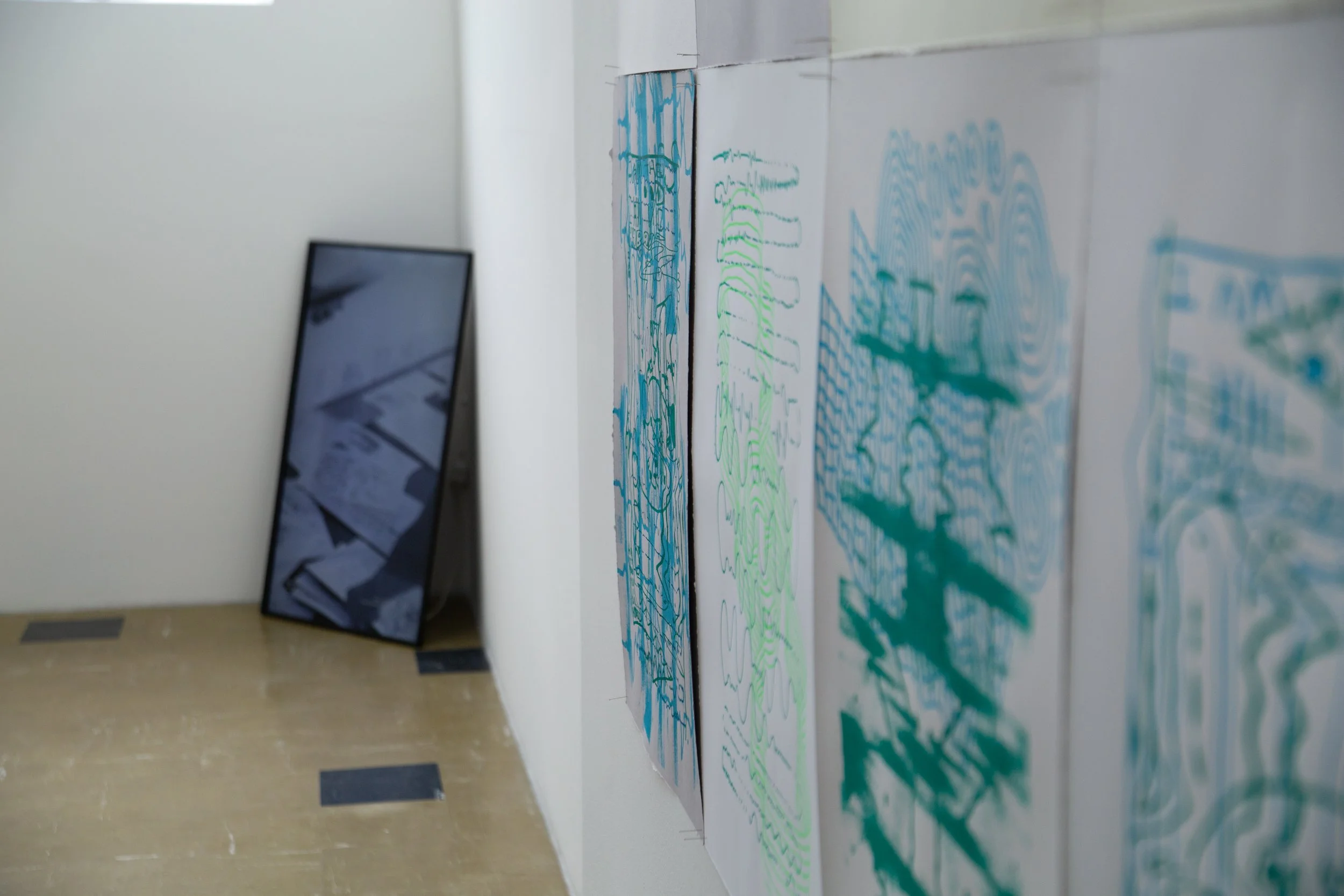
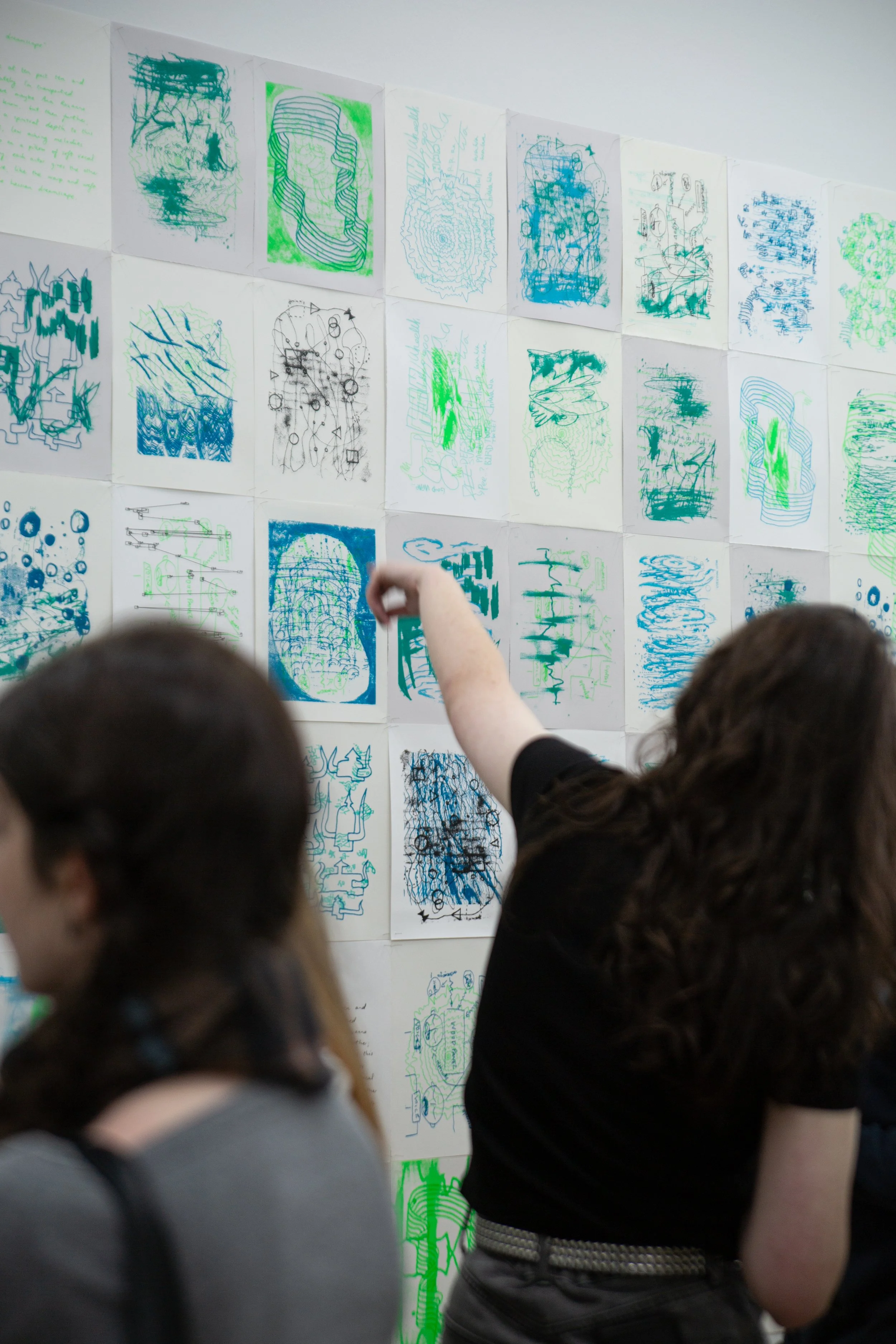
Once we had digitised our selected designs and chosen our thematic inks of ‘forest greens’ and ‘midnight blues’ we began screen printing. Single prints, overprints, small and large. This printing involved standard silk screens and was therefore some of the easiest and most straightforward types of printing I have completed for PPS to date.
PRINT COLLATERAL:
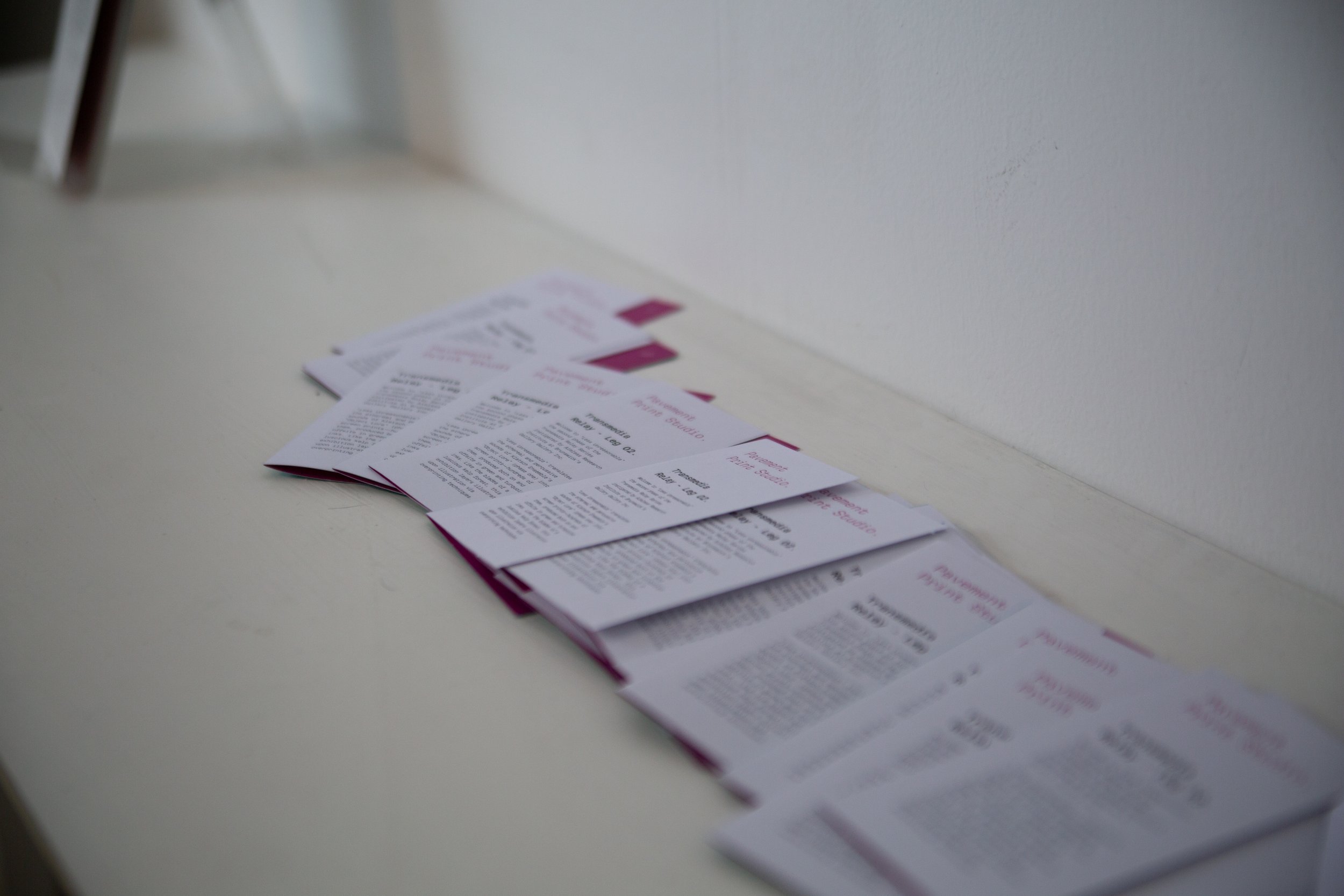
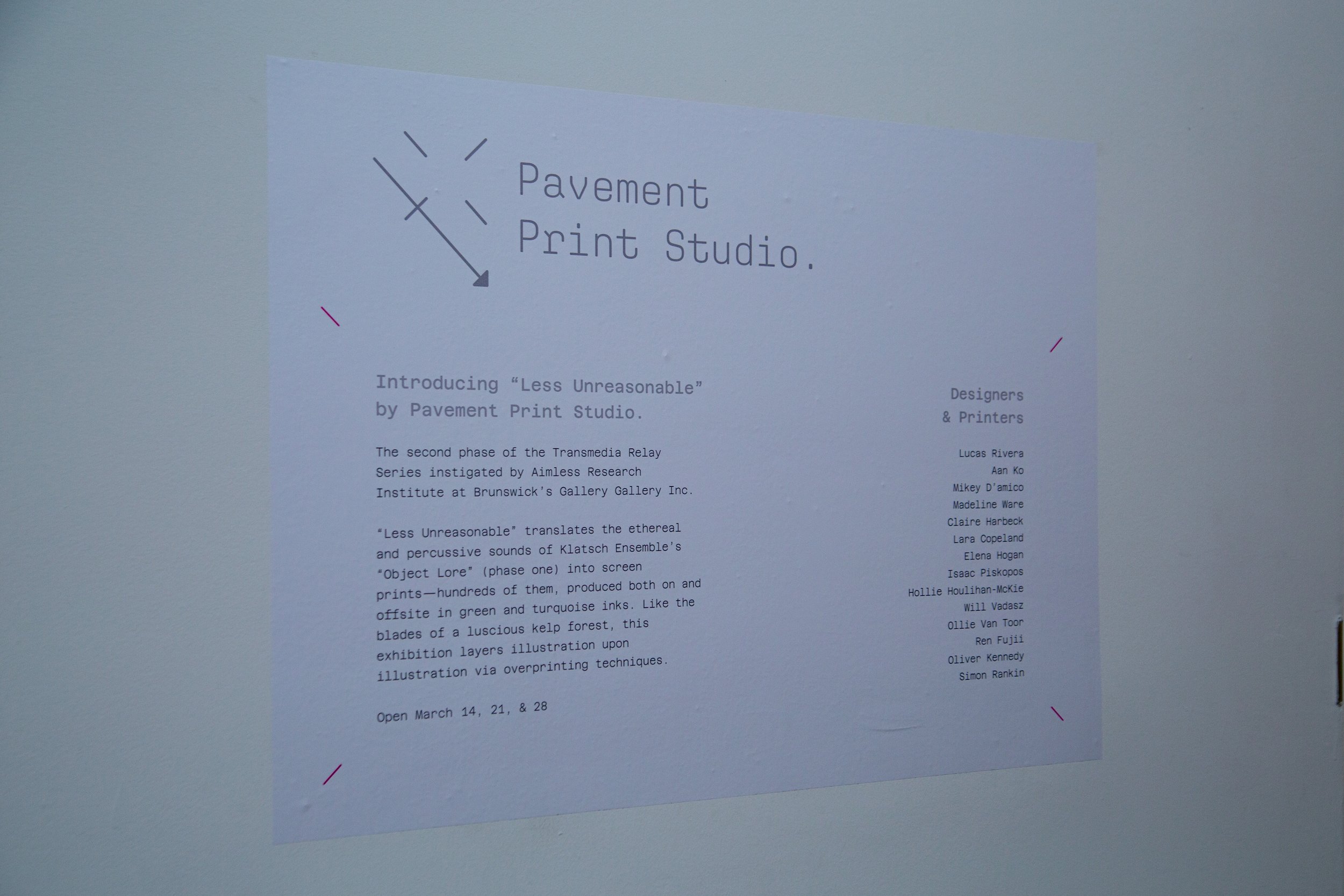
In advance of the install, I personally designed our printed collateral. I designed, tested, printed and folded a large batch of our exhibition flyers, aimed to explain the project, the space, and our collective. I then extended this communication by designing our exhibition decal, which stood at the entrance of our space, also introducing our project and team.
EXHIBITION DESIGN:
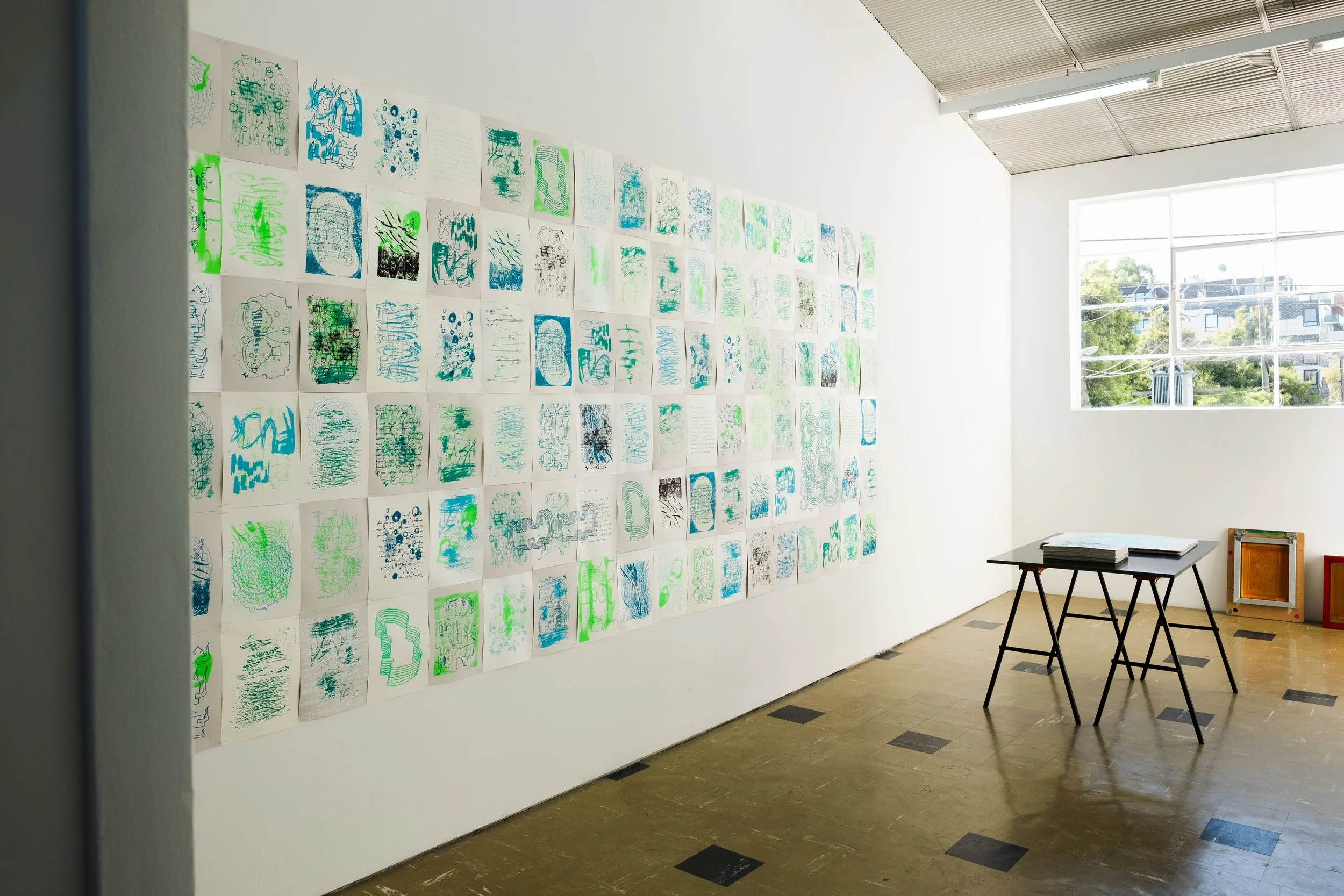
Now that we had our stock, we took them to the exhibition space and we worked together to select our our favourite prints. We then began curating the space by planning what wall segments would be covered, as well as the types of prints and objects that would be in their place. We designed the order of prints and their resulting larger compositions of pinned artworks, creating our final installation.
OUTCOME:
“Less Unreasonable” was representation of the moment when sonic performance becomes screen-printed visual language. KLATSCH Ensemble's six-hour performance Object Lore happened in this same space. Our response emerged from that encounter. 22 exposed screens, layered prints in forest greens and midnight blues.
Scroll For Part 04 MARCH - MAY 2025
INSTALL 03 /
Art Directer,
Exhibition Designer,
Facilitator.
OPEN EDITION:
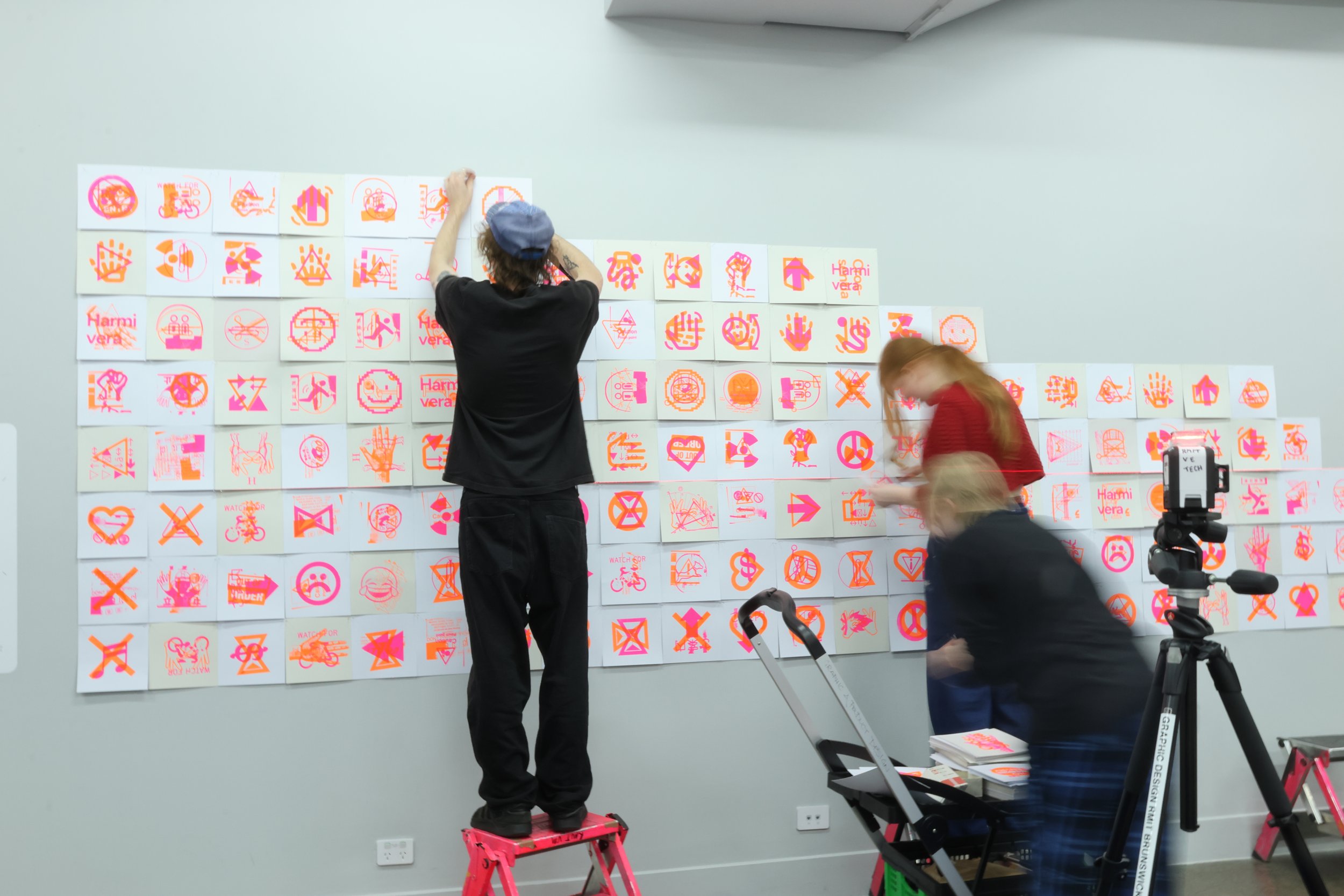
Open Edition invited members of the public to become contributors to a collaborative screen printing activation and exhibition during Melbourne Design Week 2026 and Brunswick Design District 'Design Behind Closed Doors’.
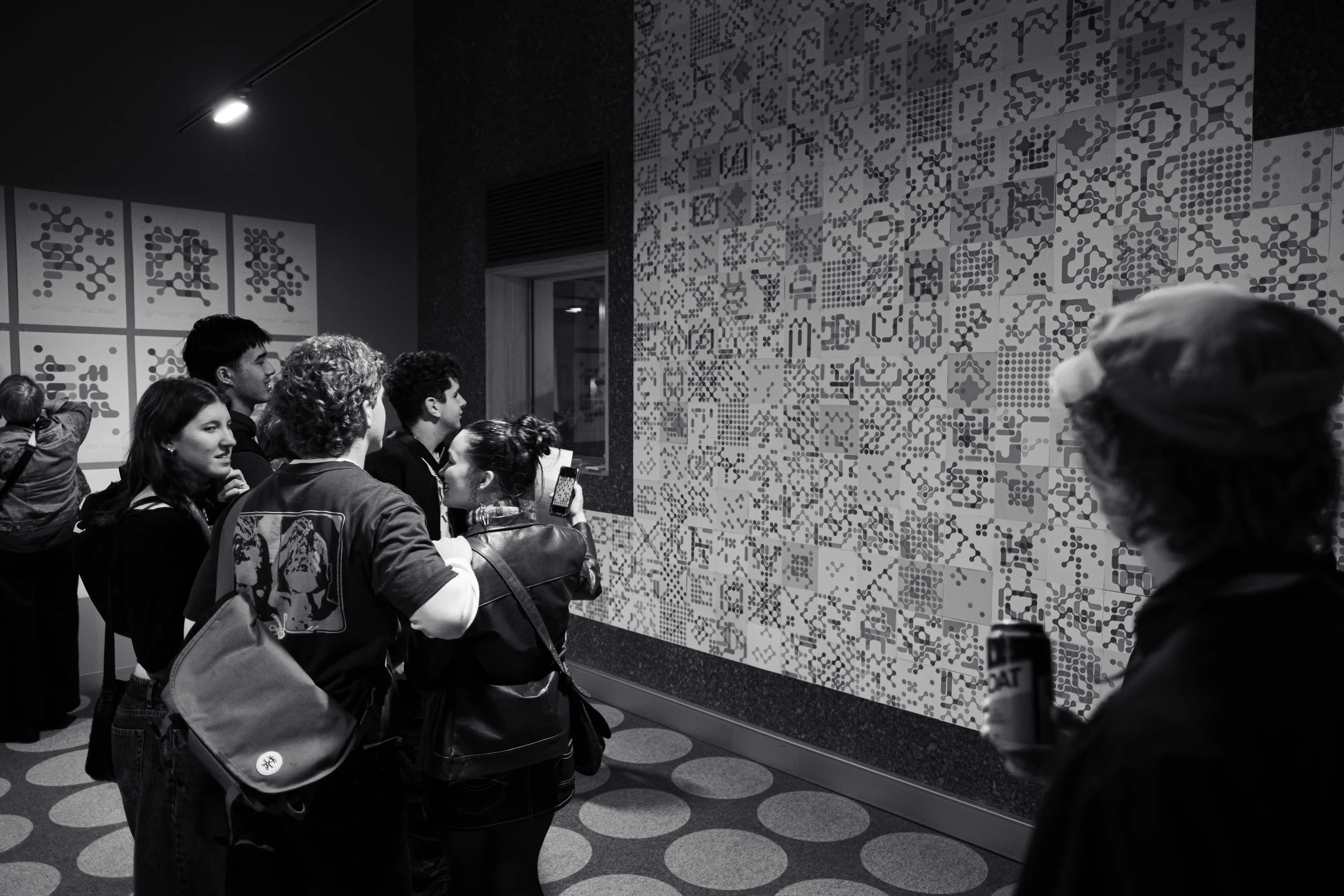
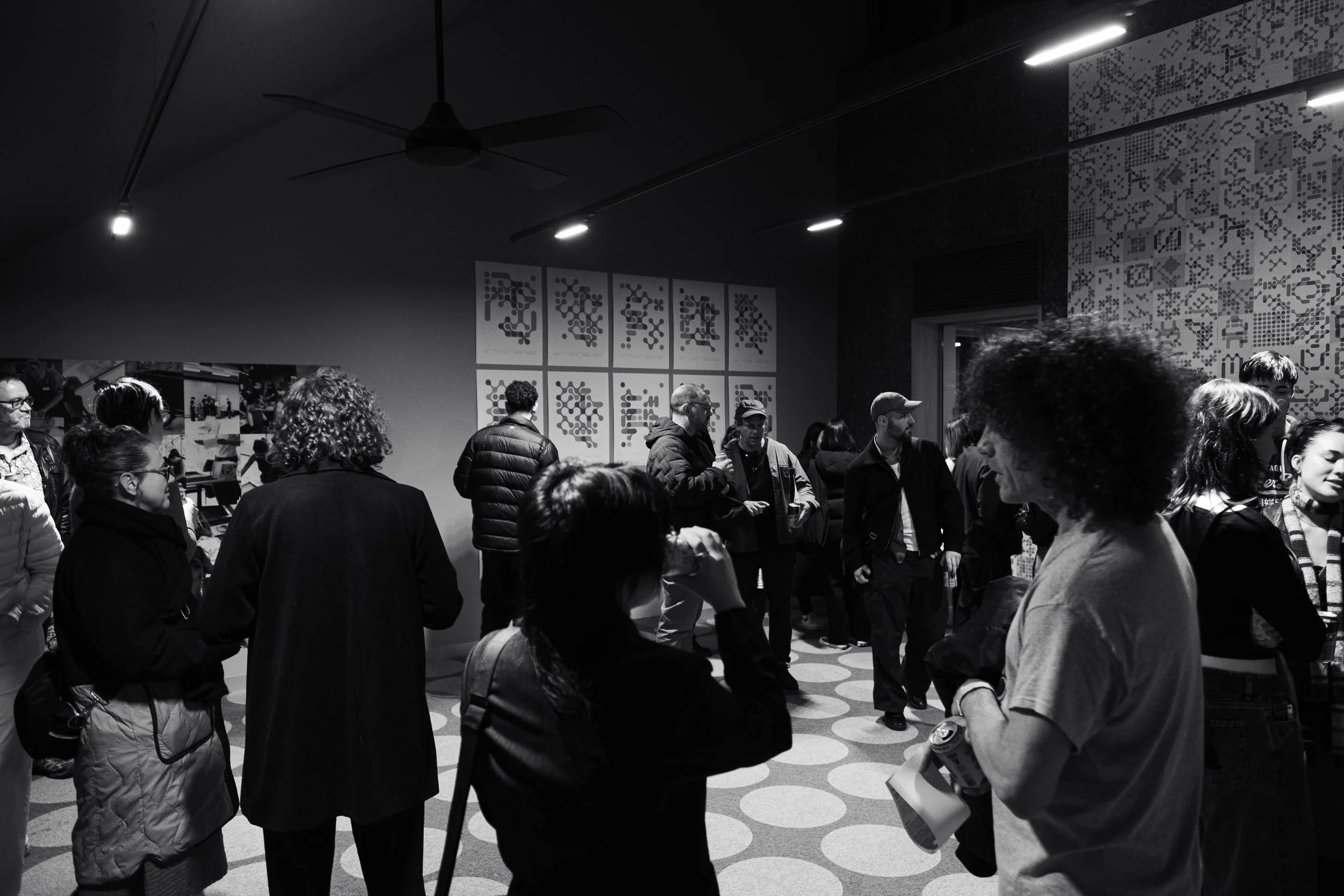
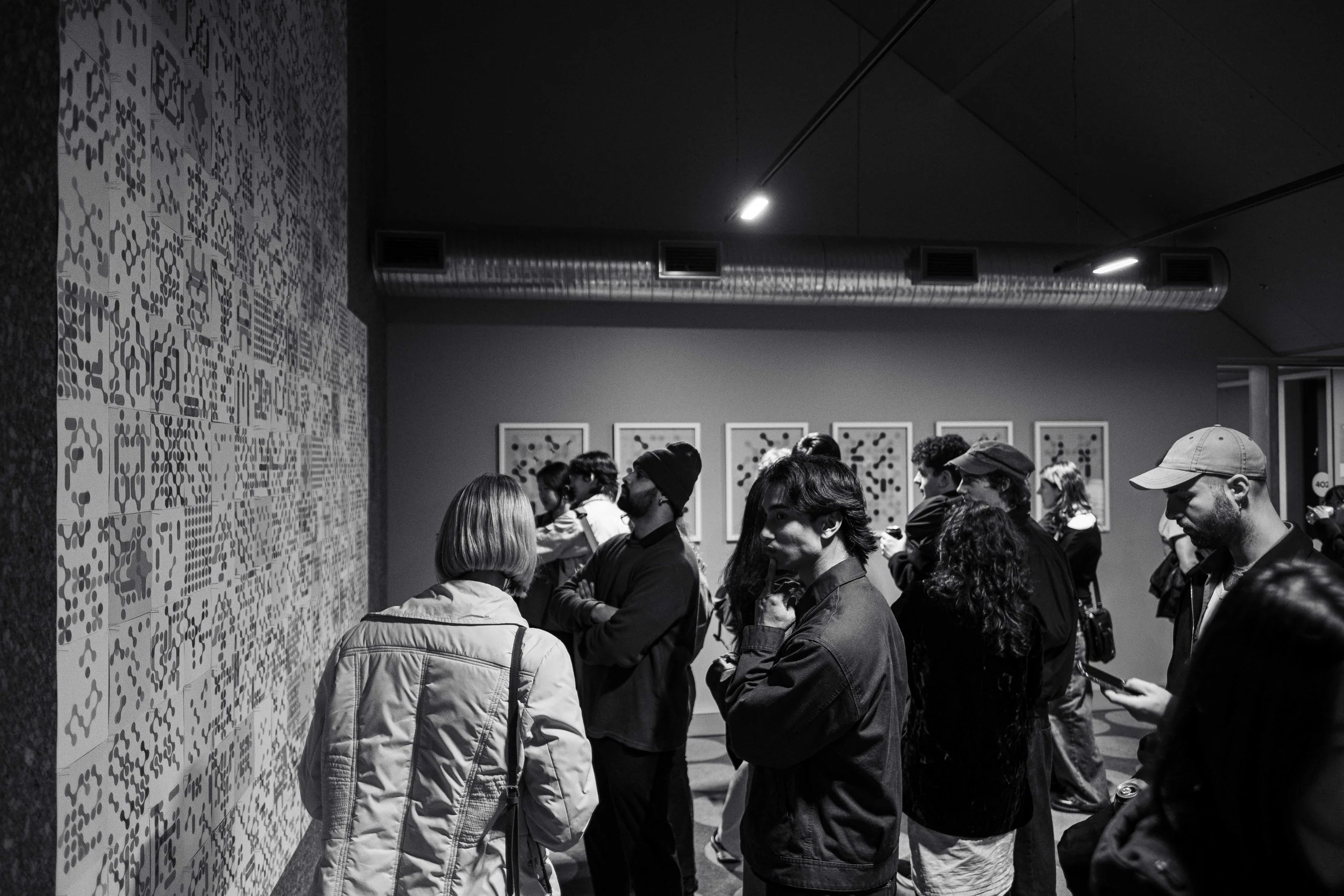
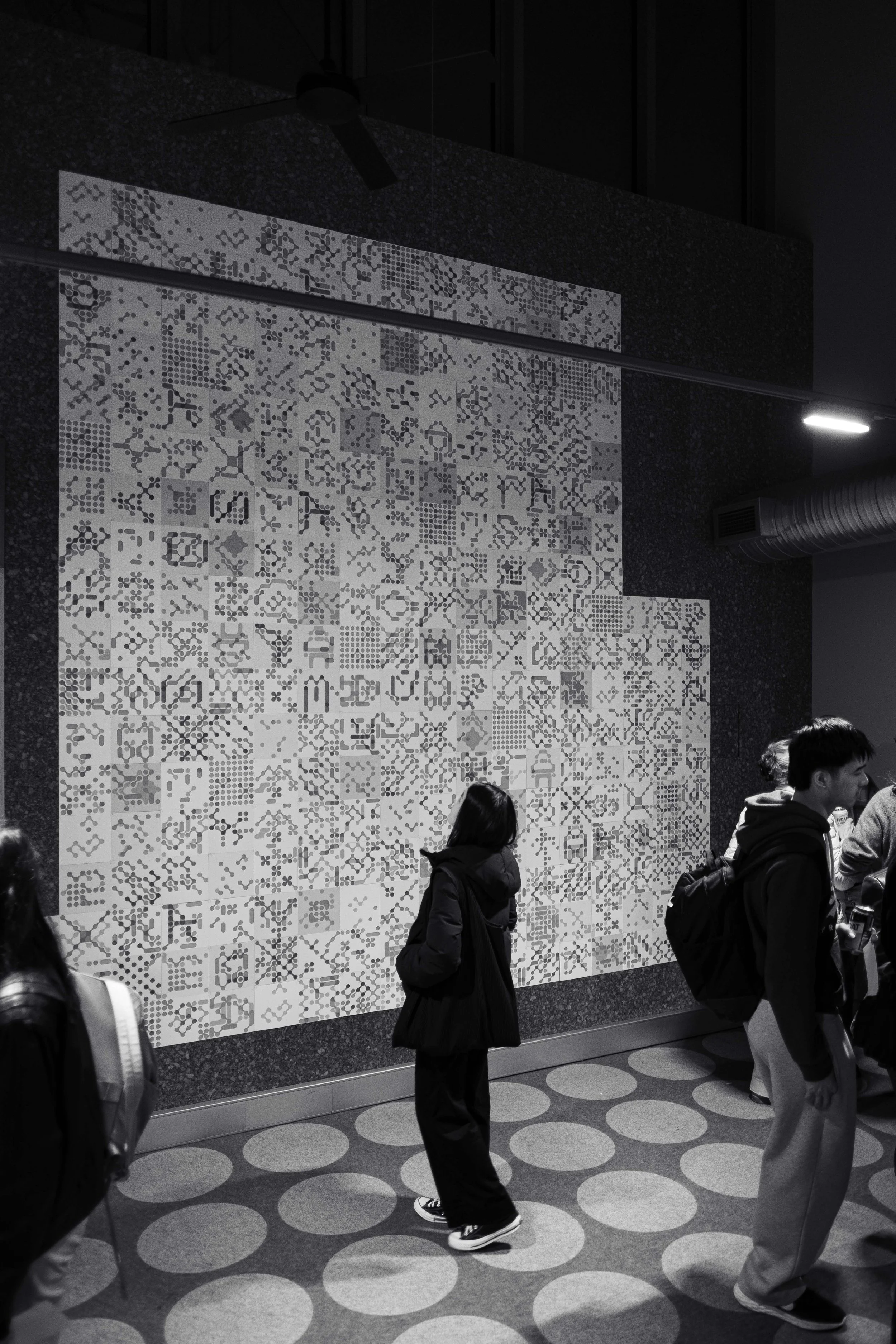
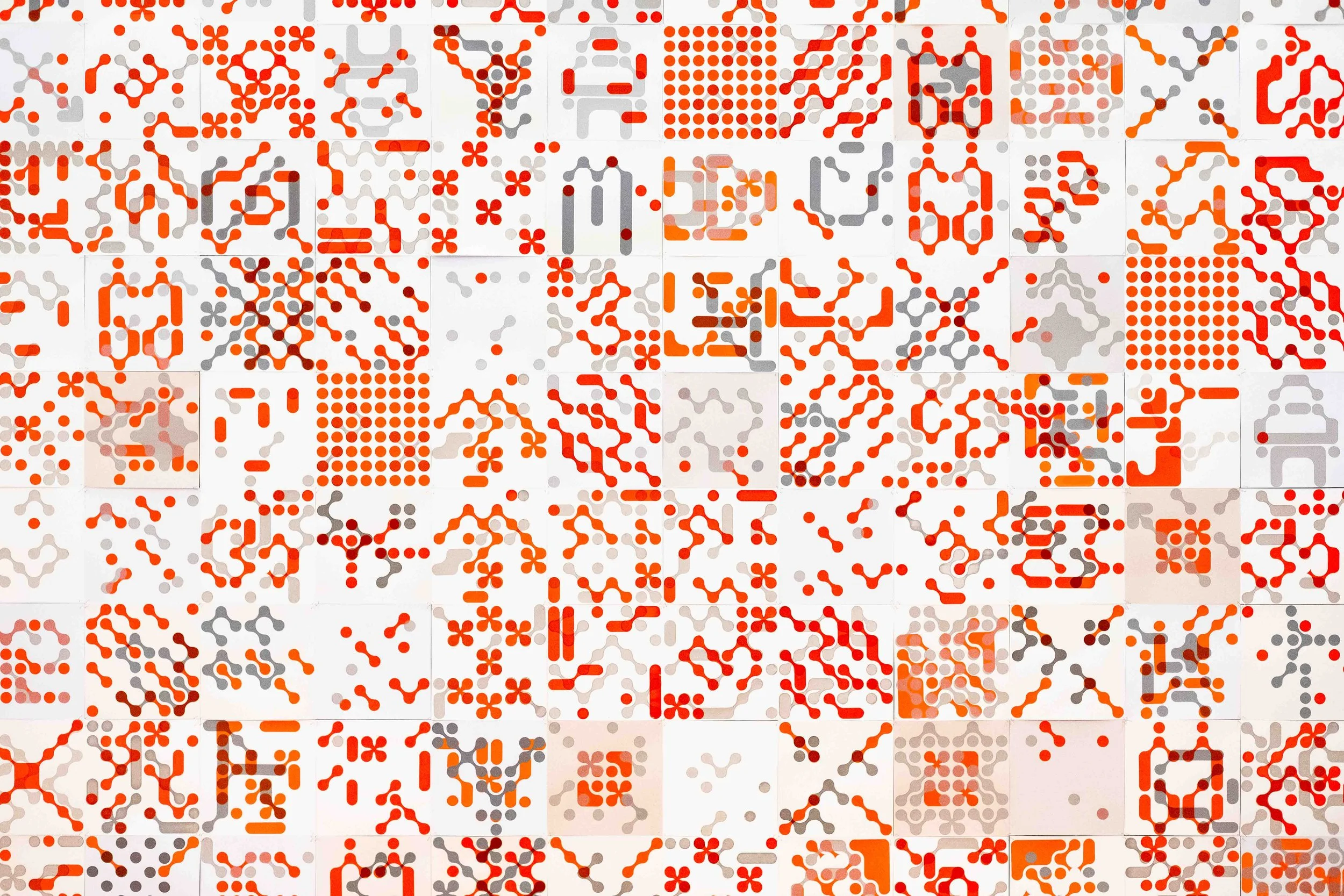
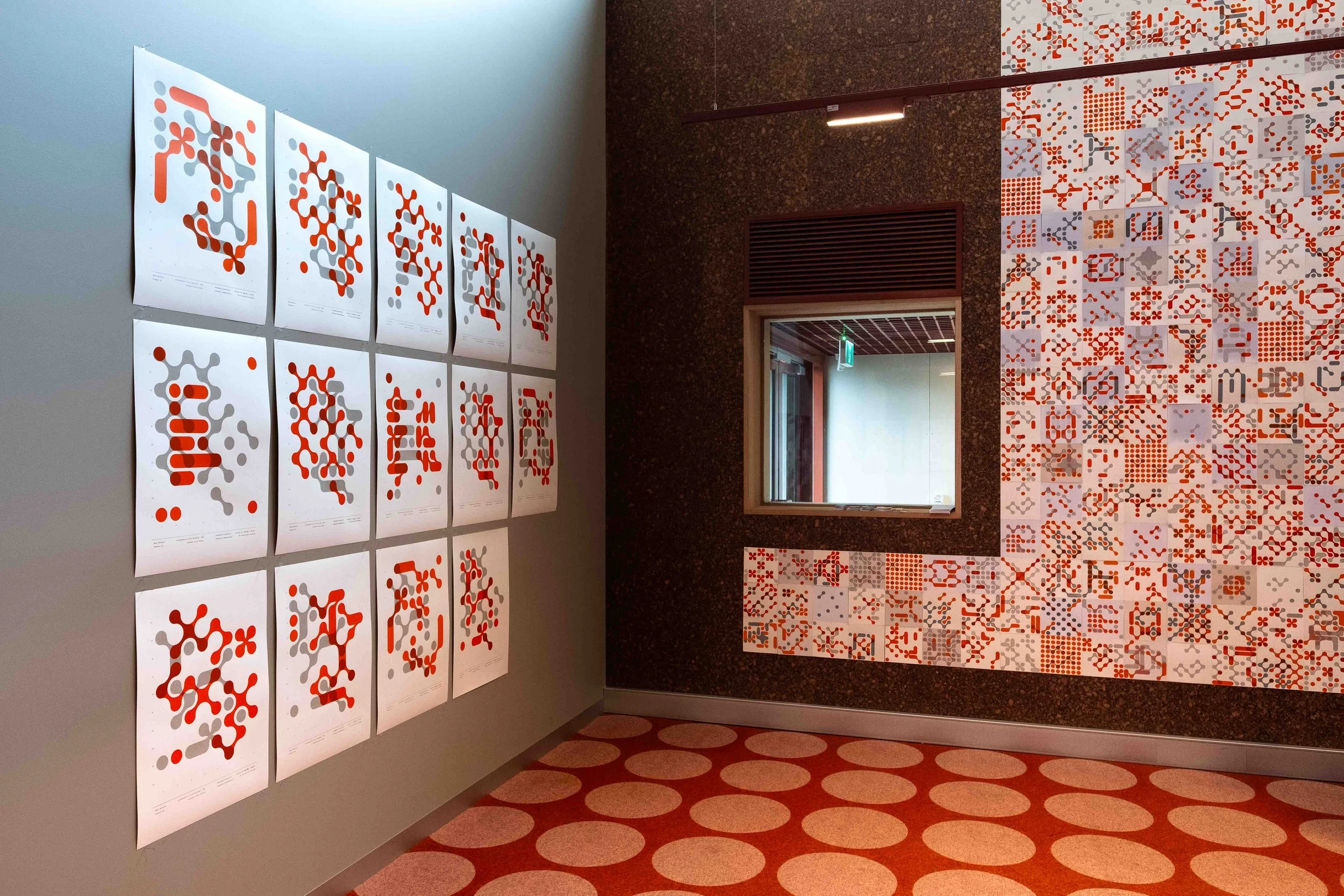
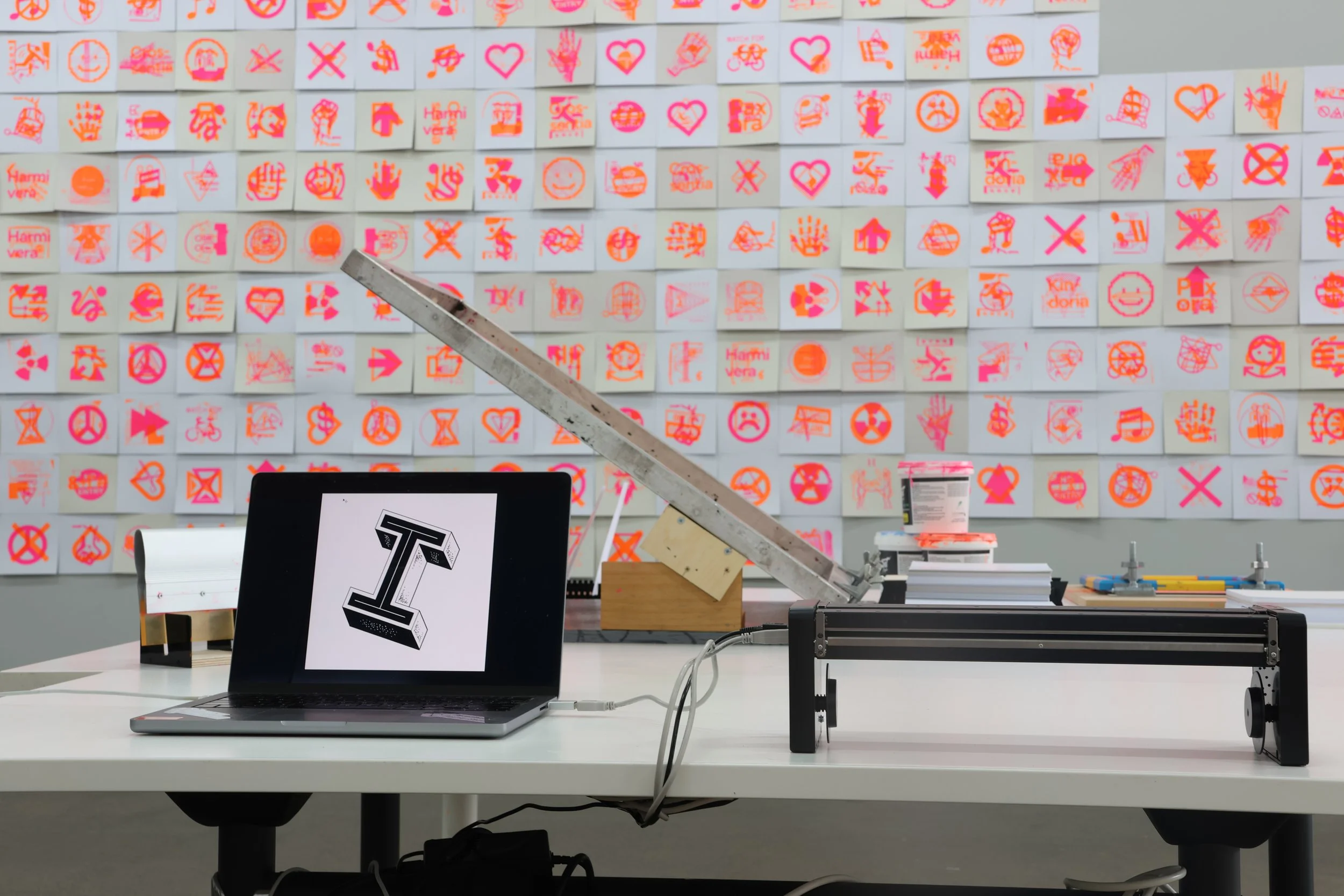
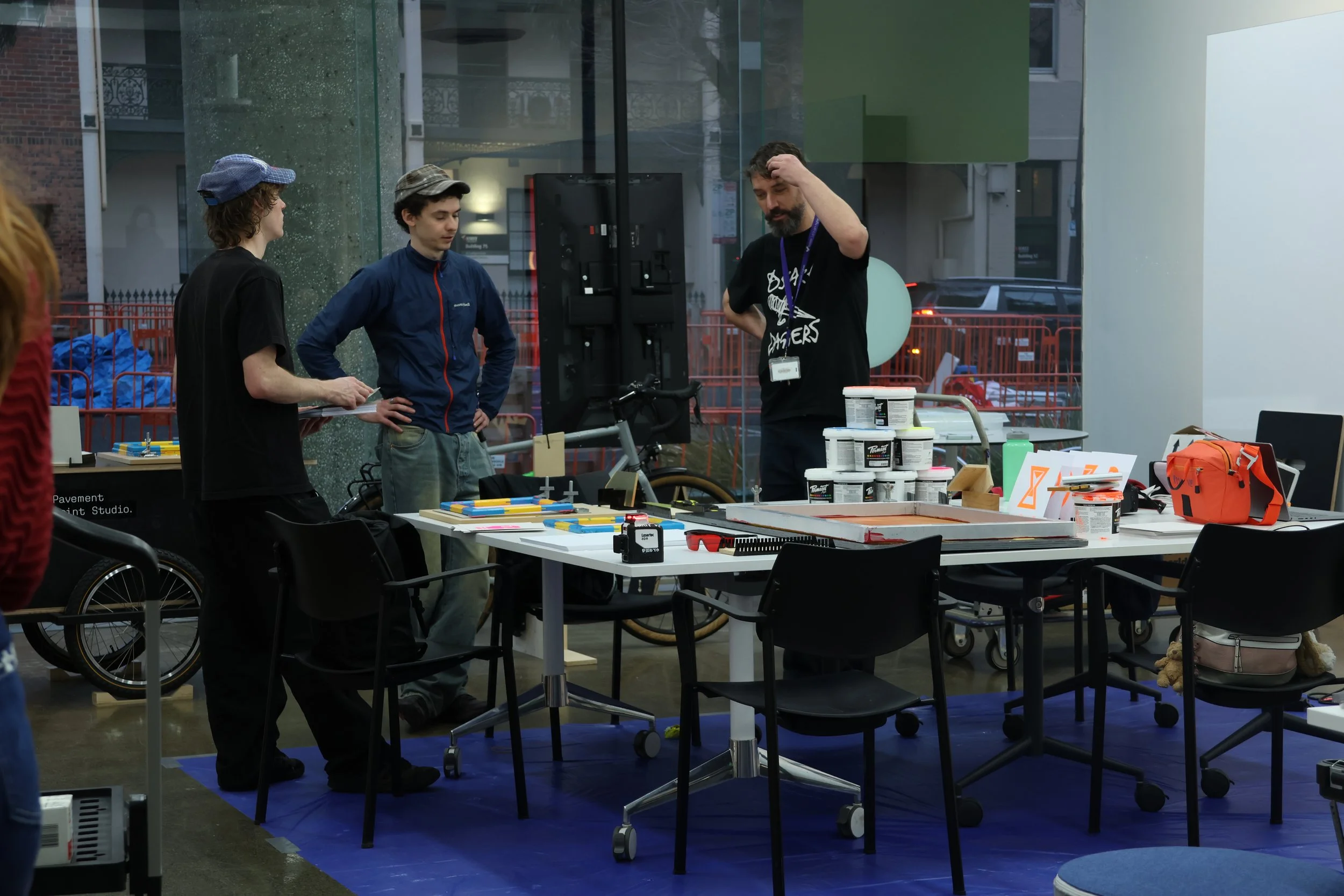
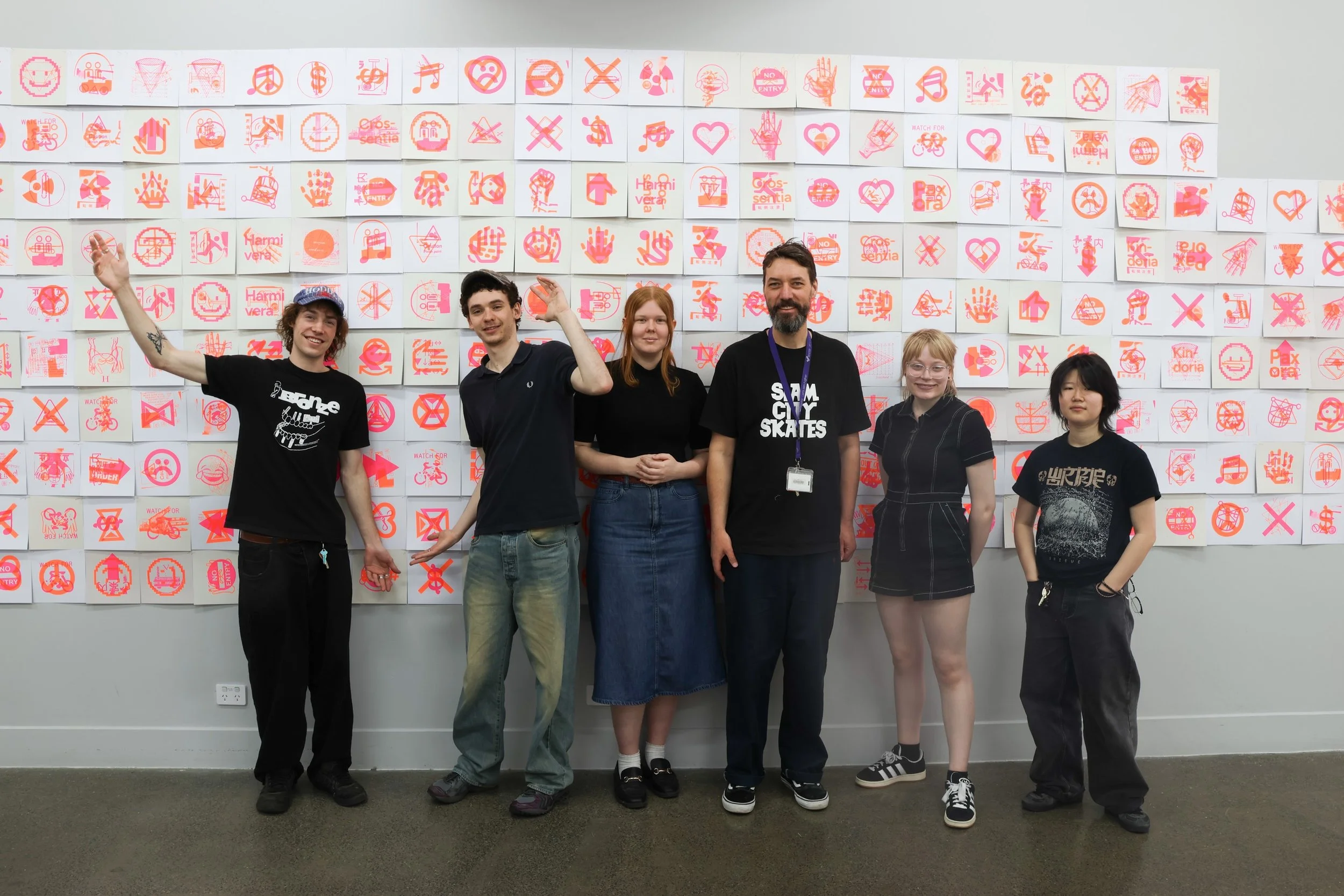
Over four days we ran eight workshops with eighty participants, creating 631 two colour collaborative prints that became a large-scale installation at Balam Balam Place in Brunswick.
PRINT SYSTEM BRIEF:
When the opportunity to create a MDW Workshop & Exhibition presented itself, the first note was that we wanted the Workshop outcomes to create a larger connecting network than that of our prior instalments. We discussed Map-like structures, Tiles, and other methods of modular print systems, making for an exhibition piece of greater collaboration.
RESPONSE:
I thought about how we could create this space for participants to play, whilst still building towards a larger outcome, and my response was to construct an array of grids. This was my first thought because of my experience with type design, and my resulting familiarity with grid systems. There was no other developments being made amongst the group, so I took took it upon myself to commit and began building our Event’s system.
CONCEPT:
The idea was to create a grid that participants could “colour in” to create their own artworks and patterns.
These drawings, however, would need to be designed within a system that assured connection between them all.
This connection problem then prompted the single limitation of all my exploration. Gutters.
By implementing gutters in between my chosen grid shapes, I could then add a Margin of half the Gutter size around the border of the piece. Now, when multiple designs are placed adjacent to each other, their margin’s will combine to create the same width or height of the internal gutters, making for a flush array of shapes, spaced evenly throughout the Exhibition’s display.
DEVELOPMENT:
With these constraints, I began trialing different scales, shapes, and connecting systems. The ‘Nodes’ of the grid became empty vessels for my structures to hold new shapes, with the resulting gutters taking new forms, and creating new negative space and cross section shapes. This was countlessly tested, tweaked, and updated, to best create a smooth workflow for the future workshops.
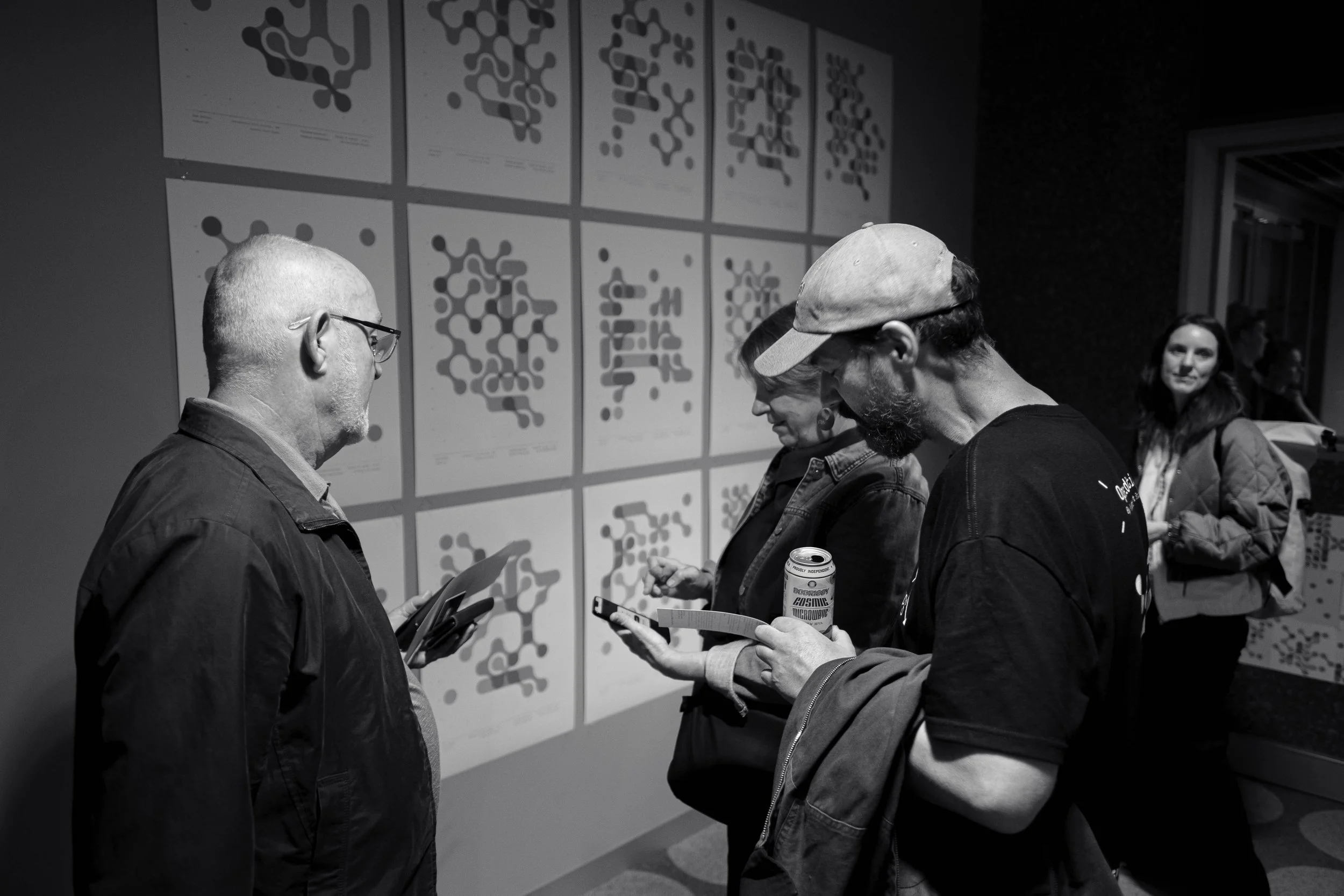
MELBOURNE DESIGN WEEK 2026 - 80 participants created 631 collaborative screen prints across 8 workshops, culminating in a large-scale exhibition at Balam Balam Place.
REFINMENT:
Once I had landed on a grid with Circular Nodes and rounded ‘slime-like’ connectors, a trip to the exhibition space both confirmed and upgraded this draft. Upon entry we were overwhelmed by the polka dot carpet, and decided to measure the circle to gutter ratio, translating it into the grid; creating a consistent ratio throughout. I updated and refined the grid, and we began doing print tests.
Maintaining this carpet / room reference, we decided to match the space with screen printed inks of grey and orange.
COLLATERAL:
For the preparation of MDW, I decided that my PPS Style Guide was not doing the project justice. To solve this, I created the ‘Open Edition Style Guide’. This was a new document to follow, with new colours, sponsor logos, brand assets and more. This document also included signage I had made for us, which became the directional signage used on site. I then designed our Embosser, and helped with our Invitation, Sticker, and T-shirt design.
RUNNING WORKSHOPS:
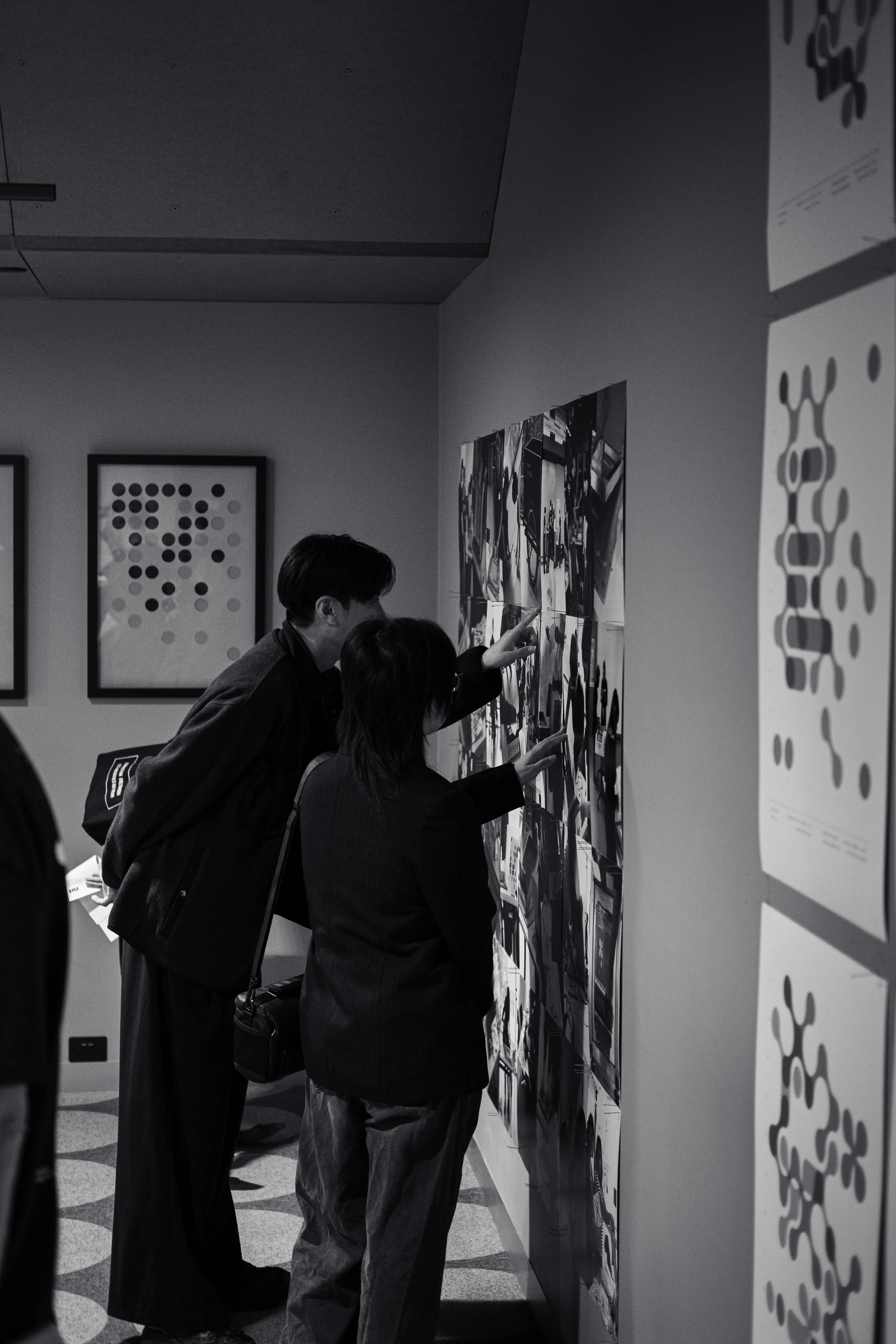
Throughout the week of workshops, I explained the grid’s nature, taught our participants how to use it, as well as how to successfully screen print with it. We facilitated design, craft, and print, all in one workflow that equated in our participants walking away with a custom, collaborative print that they made with their partner, as well as an invitation to our exhibition which they were accredited to as a contributor.
EXHIBITION DESIGN:
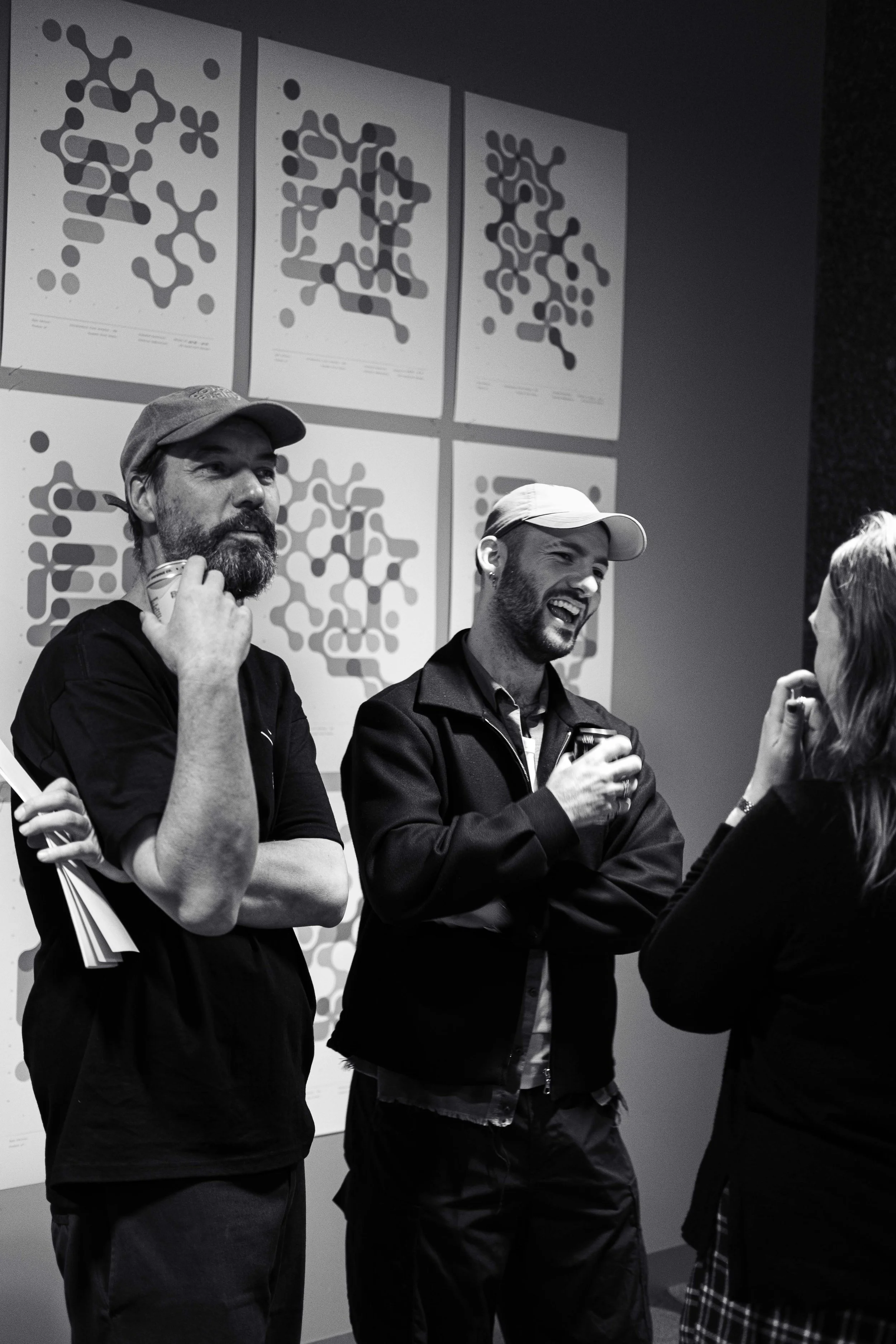
I had already made sure our workshop’s printed outcomes would fit the space, however we needed to fill up more space. My contributions for this was to design all of the Large A2 Screen Print designs, as well as some of the Laser Cut designs, that went up for sale at our exhibition. I then helped curate the space, pin up prints, arrange furnishing, and put up decals.
OUTCOME:
This project was my biggest contribution to PPS to date. I felt I was given a super exciting amount of agency throughout the whole feat, and I was so pleased to be able to manifest the exhibition and print system into something I felt came from my own creativity and decision making.
“The network motifs reflected actual networks created through the project. Networks between workshop participants who met while printing. Networks between participants and crew members facilitating sessions. Networks between the studio and institutional supporters making the programme possible. Networks between Melbourne Design Week, Brunswick Design District, and the RMIT Brunswick graphic design community.” - PPS
APRIL - MAY 2026